
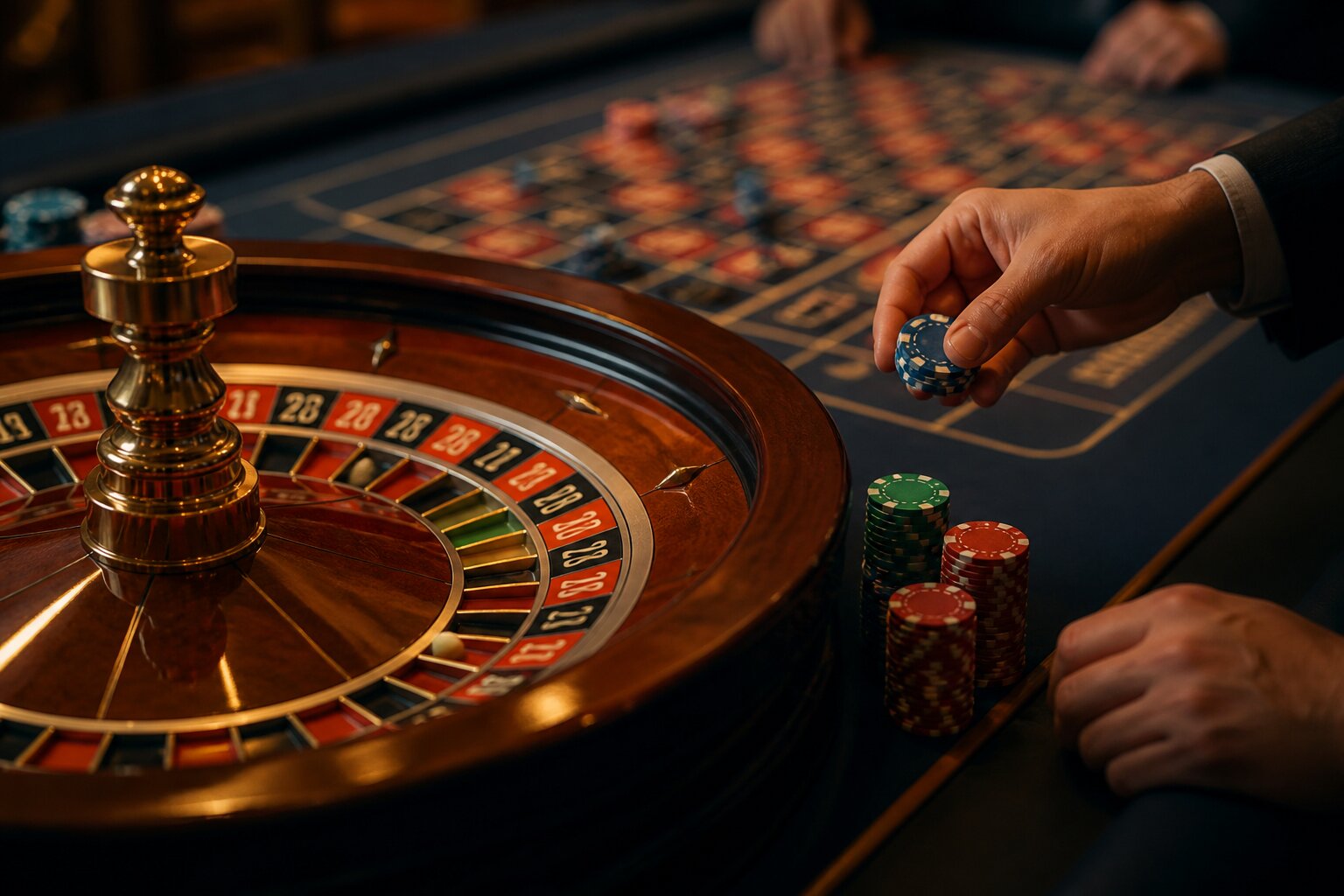
Ever found yourself at the roulette terminal in your local bookies, watching the wheel spin, and wondering if there's really a secret to beating it? Fixed Odds Betting Terminals (FOBTs) have been a familiar sight across the UK, drawing in punters with the promise of quick spins and instant results.
Plenty of people reckon they've cracked it — maybe a mate swears by their “winning streak”, or you’ve heard whispers about so‑called “trigger numbers” that are meant to signal a win if you bet at just the right moment. It’s easy to be tempted, especially after seeing someone walk away with a tidy profit.
But where does skill end and pure chance take over? Is there truly a system that gives you an edge, or are patterns simply coincidental? Before risking your next fiver, it’s worth taking a closer look at how these machines work, what these strategies claim, and whether you can actually outsmart the odds.
How Does FOBT Roulette Work?
FOBT Roulette is a digital version of the roulette you might see in a casino, presented on a touch-screen in betting shops. Players place bets on the virtual table — red or black, odd or even, or specific numbers — then press spin and watch the animated wheel. The result is generated by a Random Number Generator (RNG), so every spin is independent and unpredictable.
Minimum and maximum bets are displayed on the machine, and stakes can be spread across different bet types. Winnings are paid out automatically according to standard roulette odds. All regulated machines must use tested RNGs and are regularly checked to ensure fair play, so outcomes cannot be controlled or influenced by operators.
Understanding this technology is the first step to evaluating the many claims that follow; the next section examines common myths that keep cropping up around FOBT roulette.
Common Myths About FOBT Roulette Systems
Many ideas about roulette persist because they seem to fit what we notice in the moment. The following are some of the most common misconceptions, explained clearly so you can see why they don’t hold up.
-
Lucky streaks increase your chance of winning
Observing a run of the same colour or outcome can create the impression that a different result is “due.” In fact, each spin is independent: the RNG treats every spin separately, so previous outcomes do not affect future ones. -
Some numbers are “hot” or “cold”
Patterns of repeat appearances are simply random variation. The RNG gives every number the same theoretical chance on each spin, so there are no reliably “hot” or “cold” numbers to exploit. -
Trigger numbers or specific bet patterns can guarantee a win
Systems that wait for a particular sequence or follow a set staking plan do not change the underlying probabilities. They may rearrange when wins and losses occur, but they cannot alter the odds. -
Machines can be “due a payout”
There’s no programmed payback cycle that forces a machine to give out winnings after a run of losses. Randomness means outcomes follow no schedule. -
Skill can beat the system
Unlike games with meaningful player decisions, roulette outcomes on regulated machines are not affected by skill or timing.
These points set the scene for the next topic: why many players still fall for systems such as martingale or Fibonacci, and what the math behind the game actually means for anyone tempted to use them.
Can Trigger Numbers or Betting Patterns Really Help You Win?
Trigger numbers and betting patterns are popular because they promise structure and give players something to do between spins. A trigger might be a number that, when it appears, signals a change in bet selection; patterns tend to focus on sequences of outcomes or adjustments to stake size after wins or losses.
Examples include doubling stakes after losses (martingale) or following the Fibonacci sequence for stake amounts. The reasoning usually rests on the belief that a win will eventually arrive and recover losses, or that certain sequences herald a profitable run.
However, with an RNG governing each spin, there is no causal link between past and future results. Patterns are coincidences unless a mechanism connects outcomes, and regulated FOBT software provides no such mechanism. Betting systems can change the tempo of wins and losses but cannot remove the operator’s edge or reliably produce profit. They also introduce practical risks: quickly escalating stakes, reaching machine limits, or depleting a wallet before a needed win happens.
A clearer view of the mathematics and the house edge helps explain why these methods cannot deliver a dependable advantage, which is explored next.
House Edge & RNG: What Do They Mean for Players?
The house edge is the mathematical advantage built into the pay-out structure of roulette. In the common single-zero format found on most UK machines, that edge is roughly 2.7%. Practically, this means that over a large number of spins the operator is expected to retain a small percentage of the total money wagered. Short-term results can vary widely, but the edge determines the long-run expectation.
Different bet types — red/black, single numbers, columns — all carry the same underlying disadvantage because payouts are set below the true odds. No betting pattern can alter those pay-out ratios.
The RNG is the mechanism that produces each independent outcome. It is tested and audited to ensure unpredictability and fairness. When you combine an immutable house edge with genuinely random outcomes, the result is that no system or pattern can reliably tilt the long‑term balance in a player’s favour.
With that settled, it’s useful to look at the specific systems players turn to and why they appeal despite these limits.
Examining Popular Strategies
A quick tour of common systems shows both their logic and their limitations. Players often adopt them to manage stakes, seek structure, or chase a particular rhythm in play, but each faces the same hurdle: randomness plus the house edge.
What Are the Most Talked-About FOBT Roulette Systems?
Martingale
This classic method doubles the stake after every loss so that a single win would recover earlier losses plus a small profit. While it can work briefly, consecutive losses can force stakes to skyrocket and hit maximum bet limits or exhaust the player’s funds before a win arrives.
Fibonacci
Bets follow the Fibonacci number sequence, moving forward after a loss and stepping back on a win. The progression is gentler than martingale, but extended losing runs still inflate stakes and can leave a player with large, risky bets.
Labouchere (Cancellation System)
A sequence of numbers determines stakes; wins remove numbers from the sequence and losses add them. The system can appear controlled in theory, but a poor run stretches the sequence and stakes indefinitely.
D’Alembert
Stakes increase by one unit after a loss and decrease by one after a win. It aims for gradual recovery, yet it does not change the expected house advantage and can still build losses over time.
Have Any Systems Ever Been Proven Effective?
No system has been shown to produce consistent long-term profit on regulated roulette. Research and regulatory oversight indicate that while systems might alter short-term variance, they cannot overcome the mathematical house edge or the independence of spins produced by the RNG. Players may experience temporary success, but the statistical expectations remain unchanged.
Having covered the practical and mathematical limits of strategies, the final section looks at how to keep play safe and within personal limits.
Responsible Gambling and Setting Limits
Keeping play controlled preserves enjoyment and reduces harm. Setting spending and time boundaries before playing, and using features on machines or sites to enforce them, helps maintain that control. Common tools include deposit and loss limits, session reminders, and time-outs; self-exclusion options are available for those who need a longer break.
Signs that play may be becoming problematic include chasing losses, neglecting other commitments, or feeling unable to stop. If such issues arise, support services and exclusion tools exist to provide help and a break from play.
Using these measures keeps the focus on a contained, informed experience and helps prevent small losses from becoming larger problems.
Play Casino Games at Lion Wins
We believe playing casino games should be about having a good time and enjoying yourself at your own pace. At Lion Wins, you can settle in and experience the fun we have to offer whenever it suits you.
Getting started couldn't be easier: just create an account, make a deposit and you'll be ready to explore our games. We look forward to welcoming you to our site.
**The information provided in this blog is intended for educational purposes and should not be construed as betting advice or a guarantee of success. Always gamble responsibly.