
Ready to spin the wheel but not sure which version of roulette gives you the best shot? You're not alone. Many players wonder how a single green zero compares with two, and that small difference has a surprisingly big effect on your chances and the house advantage.
Before you place any bets, it helps to understand the odds, payouts and how the house edge changes between the two wheels. We’ll walk through each point clearly so you can decide which game suits you and play with sensible limits.
What Is the Difference Between Single Zero and Double Zero Roulette?
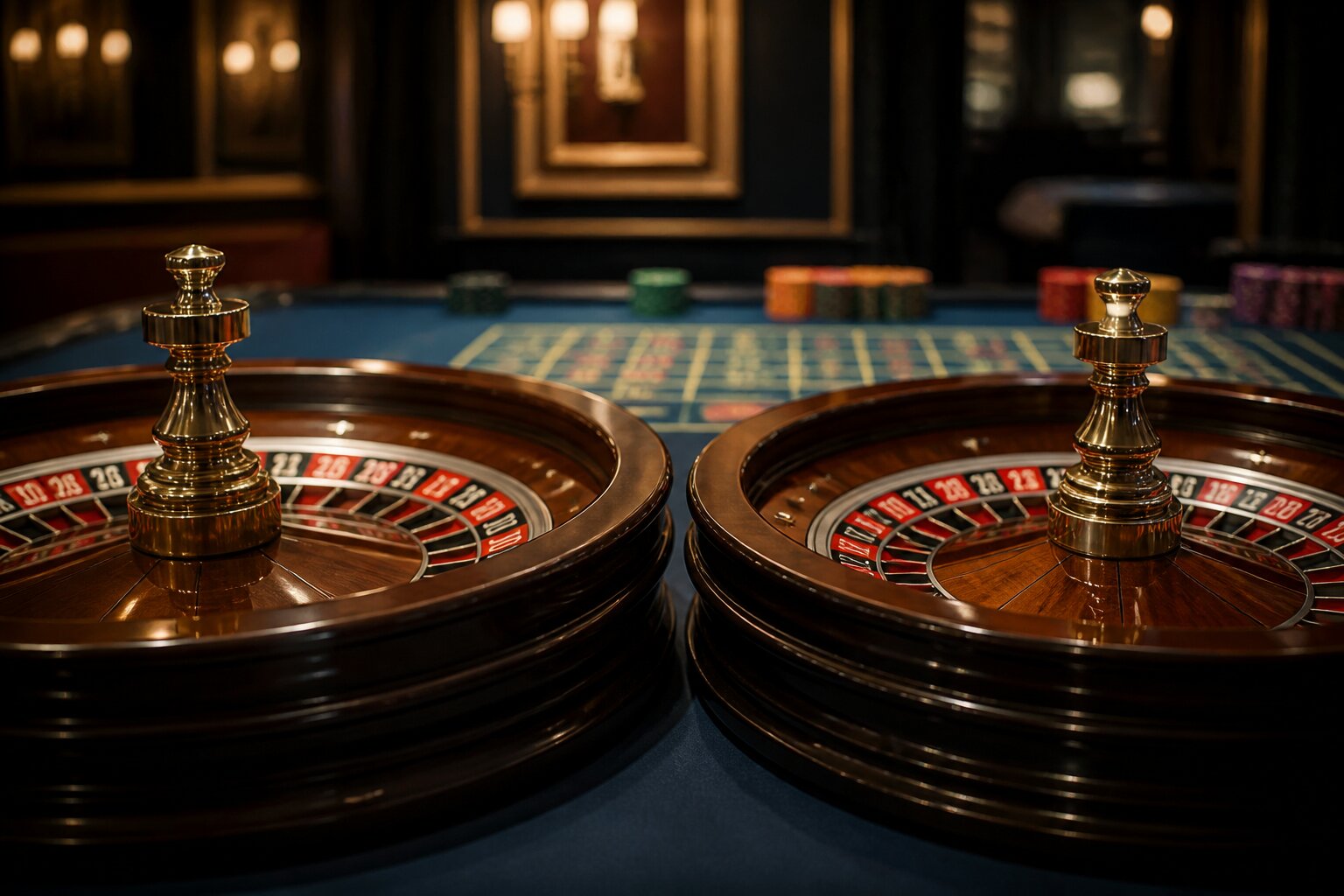
The essential difference is the number of green pockets on the wheel. Single zero roulette, often called European or French roulette, has one green 0 pocket. Double zero roulette, commonly known as American roulette, has two green pockets: 0 and 00.
Both wheels share 36 red and black numbered pockets, but the extra 00 in American roulette increases the total pockets to 38 rather than 37. This slightly alters the probability of every bet you place.
You may also notice a small difference in the table layout, since American roulette includes a position to place bets on 00 as well as 0. Those are the practical changes that matter to a player choosing which table to join. Each spin is independent and cannot be predicted, so knowing the structural differences is the best way to make an informed choice.
How Do the Odds Compare for Single Zero and Double Zero Roulette?
Because the number of pockets differs, the raw odds shift a little between versions. In single zero roulette there are 37 pockets, so a straight-up bet on a single number has a 1 in 37 chance, about 2.70%. In double zero roulette a single number bet is 1 in 38, roughly 2.63%.
Even-money bets are affected too. In single zero roulette the chance of winning an even-money bet such as red or black is about 48.6%. In double zero roulette that probability falls to around 47.4%.
Those are small numerical differences, but over many spins they change how often a player wins versus how often the house retains a portion of stakes. The next section explains how those percentages translate into the house edge.
Payouts: What Can You Win on Each Version?
Payout rates are standard across both versions and are tied to the type of bet rather than the wheel itself. A straight-up bet on a single number pays 35 to 1. A £1 winning bet returns £35 plus the original £1 stake.
Other common payouts are:
- Splits (two numbers) pay 17 to 1.
- Streets (three numbers) pay 11 to 1.
- Corners (four numbers) pay 8 to 1.
- Even-money bets such as red/black pay 1 to 1.
Although the payout schedule is the same, your true chance of landing those payouts is slightly lower in double zero roulette because of the extra pocket. That difference is reflected in the house edge, which we’ll look at next.
What Is the House Edge for Single and Double Zero Roulette?
The house edge is the long-term average advantage the casino holds; it’s built into the game’s structure and shows how much of players’ stakes the house expects to keep over time.
In single zero roulette the house edge is about 2.7%. That means if a very large amount of money is wagered repeatedly, the casino would retain about £2.70 for every £100 staked on average. In double zero roulette the house edge rises to about 5.26%, equivalent to around £5.26 retained per £100 staked over the long run.
This difference comes directly from the extra 00 pocket on the American wheel. The house edge is not something players can overcome by betting patterns; it is a mathematical feature of the game that becomes apparent over many spins, not within a single session.
Which Version Is More Popular in UK Casinos?
Single zero, or European roulette, is the more common format in the UK. It appears in most land-based casinos and is widely available across online operators. Its prevalence reflects both historical preference and the fact that many licensed UK operators standardise on the single zero wheel.
Double zero roulette is less common and usually seen in some international venues or as a specialised option online. You may still encounter it at certain themed tables or in casinos that cater to international visitors, but it is not the norm for UK sites and venues.
If you prefer the version with the lower house edge, single zero is generally the obvious choice. Availability still varies between venues, so it is worth checking the table rules, wheel type and any specific house limits before you sit down to play. Also check operator licensing and terms to ensure the game meets your expectations and any responsible gambling safeguards are in place.
Are There Any Common Misconceptions About Roulette Odds?
Several myths circulate about roulette. One frequent idea is that previous spins affect future results; in reality each spin stands alone and cannot be influenced by what came before. Another is that particular betting systems can change the underlying probabilities; mathematical structure ensures the house edge remains the same regardless of a pattern of bets.
Players sometimes talk about numbers being “hot” or “cold,” but these labels do not alter the odds. Understanding that the wheel’s layout determines probability helps avoid treating short-term patterns as meaningful trends.
If you find these common misunderstandings interesting, the next section considers how personal preference and table features can guide your choice of game.
Choosing the Best Roulette Version for a Better Experience
Picking a roulette version comes down to which feel and rules you prefer. Single zero roulette offers a slightly better mathematical return to players because of the lower house edge, while double zero provides a different table layout that some players may find novel.
Beyond pocket counts, look at side bets and rule variations that certain tables include, as these can change the experience and occasionally alter expected returns. Some tables apply special rules such as en prison or la partage in French-style games; these rules can effectively reduce the house edge on even-money bets and may be worth seeking out if you favour those wagers.
Decide which aspects matter most to you — lower house edge, table layout, or specific rules — and choose accordingly. Keep to predetermined spending limits and play within them so the game stays enjoyable.
Make a choice based on what gives you the most clarity and comfort at the table, and you’ll get more from the time you spend playing.
**The information provided in this blog is intended for educational purposes and should not be construed as betting advice or a guarantee of success. Always gamble responsibly.