
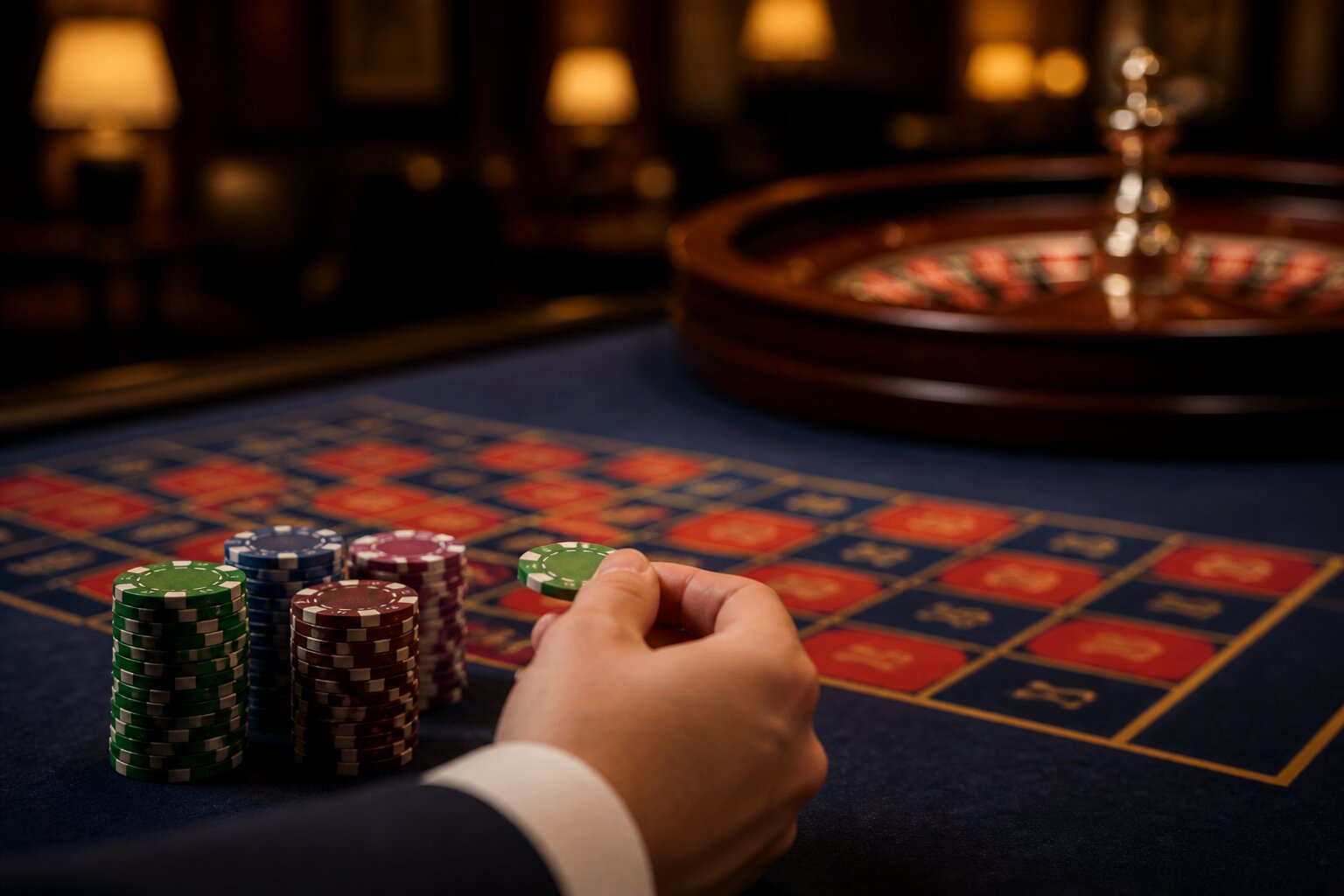
Roulette is one of the most popular games in a casino. For some players, the spinning wheel, the bouncing ball and the moment the result appears give every spin a real sense of theatre.
Many players notice sequences on the board and wonder whether those sequences say anything about what will come next. In this post we’ll look at the patterns people spot, why they seem convincing, and what the mechanics and testing behind the game actually tell us. Read on to separate the interesting observations from reliable indicators.
What Are Roulette Patterns?
Roulette patterns are simply sequences or trends that players record while watching the wheel. Typical examples include several reds in a row, a run of odd numbers, a number appearing more than once in quick succession, or results clustering on one section of the wheel.
These sequences can happen purely by chance. Each spin is independent and has no memory of earlier results. When a colour or number appears repeatedly it’s often just the way random outcomes can cluster from time to time.
Spotting a run—say, five reds in a row—makes the sequence feel meaningful, but that feeling comes from how humans spot order in random events. Patterns are interesting to observe and discuss, yet they do not change the odds of the next spin.
Popular Patterns Players Notice on the Roulette Wheel
Players often like to name and track different kinds of sequences they see on the board. These observations are part of the experience and a way to follow the game, whether at a physical table or during an online session.
Below are the common ones many people talk about and notice while watching spins.
Red or Black Streaks
Seeing the same colour several times in succession is among the most remarked-on occurrences. A long run of red or black can be visually striking, especially in a lively room, and it naturally draws attention from other players.
Such streaks are easy to remember and to discuss, which is why they often become the focus of table conversation. However, a streak is a short-term feature of outcomes rather than proof the wheel is behaving differently from random expectation.
Odd or Even Runs
A run of odd or even numbers can look unusual and prompt conversation about whether the wheel is favouring one type over another. Because these outcomes are simple to check, players spot and comment on them quickly.
In reality, runs of this kind are simply part of how random results distribute. They can happen by chance and do not reliably indicate that future results will continue the same way.
Repeating Numbers
When a particular number appears twice or more within a short span, players often label it “hot.” This can feel exciting, and some people will place bets based on that short-term observation.
It is important to remember that seeing a number repeat is not evidence of a lasting pattern. Repeats can and do occur in random sequences without implying a change to the underlying probabilities.
Neighbour Numbers
Sometimes results fall close to one another on the wheel layout, giving the impression the ball is favouring a section. The physical arrangement of pockets makes some clusters more noticeable, and players will point out when consecutive hits are neighbours.
This observation may reflect chance or minor physical factors in a given game, but it should not be taken as a reliable forecasting method for future spins.
Alternating Patterns
An alternating sequence such as red-black-red-black or high-low-high-low is another common pattern players point out. Alternation can seem regular and can draw interest because it looks orderly.
Like other patterns, alternation can and does occur naturally in a random process. Noticing it is part of enjoying the game, but it does not provide a dependable strategy for predicting what comes next.
These patterns contribute to the social and entertaining side of roulette and give players things to talk about. They make the game engaging, but they do not provide a reliable edge or forecast for future spins.
Can Patterns Help Predict the Next Spin?
No pattern provides a dependable method for predicting the next spin. Each spin is independent, and the previous result does not change the mathematical odds for the next one. That principle holds whether you are watching a physical wheel or using an online game.
People often feel otherwise because clusters and streaks stand out to the human eye. Those moments can create strong impressions, yet they don’t indicate an underlying mechanism that influences subsequent outcomes. The clearest way to think about it is that patterns are descriptive — they tell you what has just happened — rather than predictive.
Still, players find it tempting to use patterns as the basis for bets. Understanding why they feel convincing helps explain why such strategies persist even though they don’t alter probabilities.
Why Do Some Players Believe in Predicting Patterns?
The tendency to see meaning in random events is a well-known psychological effect. When outcomes cluster, the mind searches for cause and consequence. This leads to the gambler’s fallacy—the belief that after a run of one kind of result, the opposite is more likely to occur next.
That mental shortcut explains a lot of behaviour at the table. Players may develop rituals, track sequences on paper or on apps, and change their bets based on recent results. Those actions make the game more engaging, but they do not change the independent nature of each spin.
The Science Behind Roulette: Randomness Explained
Roulette is engineered so that every spin produces an unpredictable outcome. In land-based play the result comes from the mechanical action of the wheel and the ball, with many tiny physical factors affecting where the ball finally settles. In online games, the result is produced by a Random Number Generator (RNG), a tested piece of software that outputs results intended to mirror the unpredictability of a physical wheel.
Both environments are subject to independent testing and regulatory oversight to ensure fairness. Testing bodies check the RNGs and the equipment used in casinos to confirm outcomes meet expected statistical properties. This regular scrutiny is part of why casinos publish return-to-player figures and why operators operate under regulatory rules that demand fairness.
What this means in practice is that neither mechanical quirks nor software code should create predictable, exploitable sequences that a player can rely on. Occasional clusters and runs will appear, but they conform to the broader statistical behaviour expected from random processes.
Are Roulette Patterns a Myth?
Calling roulette patterns a myth captures the idea that they are not dependable predictors, but it’s worth being precise. Patterns themselves certainly exist as sequences of past results and can be interesting to note. The myth lies in thinking those patterns can be used to forecast future results with any certainty.
Random processes frequently produce apparent patterns; seeing them doesn’t imply any causal mechanism. For players, the useful takeaway is to treat pattern-spotting as a way to add interest to play, rather than as a method for successful prediction.
If you want to stay fully informed, it helps to keep the distinction clear between observing past results and claiming those results affect what comes next.
What Should Players Understand Before Relying on Patterns?
Before you let patterns shape your betting, consider them as part of the entertainment rather than a strategy that will improve long-term outcomes. Expecting patterns to predict results can lead to faster losses and poor decisions.
Practical steps to keep play sensible include setting spending limits, monitoring play time, and checking that your activity matches your intended budget. If your play stops being enjoyable or you feel pressured to chase events on the board, there are support services available such as BeGambleAware and the National Gambling Helpline (0808 8020 133). These resources offer confidential advice and practical tools for anyone who needs them.
Keeping these points in mind helps ensure that noticing patterns remains a social or analytical pastime, rather than a risky basis for wagering.
Final Thoughts on Recognising Patterns in Roulette
Patterns in roulette add flavour to the experience and give people something to watch and discuss, but they do not change the odds of future spins. Each spin stands alone, and the systems around the game are designed to keep results unpredictable and fair.
If you enjoy tracking sequences, make it a hobby within clearly set limits and remember the distinction between observation and prediction. Play within your means, and if you ever want guidance, help is available through recognised organisations. Enjoy the game for the excitement of the moment and for the company around the table, rather than expecting patterns to point the way forward.
**The information provided in this blog is intended for educational purposes and should not be construed as betting advice or a guarantee of success. Always gamble responsibly.