
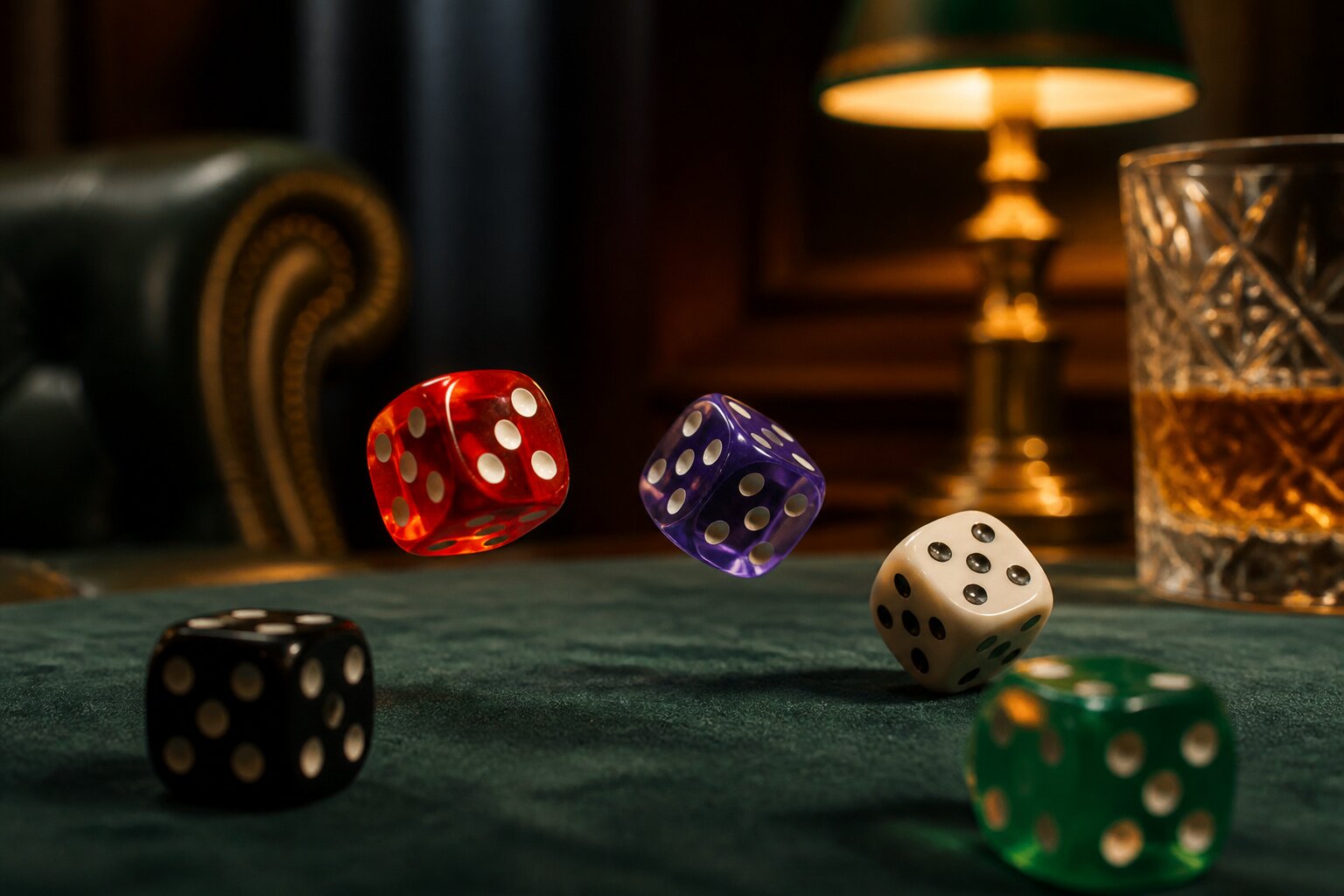
Ever heard a cheer of “snake eyes!” during a game of craps or laughter over a roll called “boxcars” and wondered what everyone means? Dice have been part of British games and gambling for centuries, and over time they’ve picked up a language of their own. Whether you’re at the bookies, a casino table, or enjoying a friendly game at the pub, these nicknames pop up as part of the social fabric around the table.
Knowing the terms helps you follow the action and join the banter, and there’s often a neat backstory behind a name. Below we unpack the most common nicknames, where they come from and how regional flavour changes what you’ll hear next.
Classic Dice Roll Nicknames Explained
This section covers the core nicknames you’re most likely to encounter, with clear descriptions so you’ll recognise them the moment they’re called out.
Snake Eyes – Two ones (total: 2). The single dots resemble a pair of tiny eyes, which is how the name came about. Many players react strongly when this appears, since it often affects common bets in games like craps.
Boxcars – Two sixes (total: 12). The paired sixes look like railway boxcars side-by-side, which is the origin of the term. It’s a distinctive call that usually draws attention.
Little Joe – A total of four, often from two twos. This older phrase is still used in traditional games and brings a touch of rhyme and nostalgia to the table.
Hard Eight – Two fours (total: 8). “Hard” calls indicate the total was rolled with matching dice; they’re harder to achieve than mixed combinations that make the same total.
Easy Eight – Any combination totalling eight that is not double four, such as five and three. The contrast with a “hard eight” is the point of the two terms.
Natural – A seven or eleven on the come-out roll in craps; it’s a favourable result in that context for certain bets.
Seven Out – Rolling a seven after the point is established in craps, which causes certain bets to lose. The phrase is specific to the flow of that game.
These names add colour and make calls quicker and clearer at busy tables. Next, we’ll look at why these nicknames stuck around and what they do for the atmosphere of play.
Why Do Dice Rolls Have Nicknames?
Nicknames for rolls developed to make games more social and easy to follow. Short, memorable calls reduce confusion in noisy rooms and give players a shared vocabulary that builds camaraderie. They also carry tradition; many phrases have been handed down through generations, preserving a link to past ways of playing.
Most terms come from simple visual, linguistic or cultural cues. A name might survive because it’s catchy, descriptive, or just amusing to say. Importantly, these nicknames don’t alter the probabilities of the game; they’re part of the experience rather than the mechanics.
While the social side is central, there are pragmatic benefits too: quick calls speed up play and help dealers and players keep track of outcomes during fast rounds. With that practical angle in mind, the next section shows which nicknames you’ll hear most often in casino games.
Popular Nicknames Used in Casino Games
At casino tables, especially in dice-heavy games like craps, a handful of terms dominate the terminology and are useful to learn.
Snake Eyes: Double ones (2). A commonly heard call that often draws a strong reaction because of how it affects common wagers.
Boxcars: Double sixes (12). A vivid name that’s easy to spot on the table.
Yo: Eleven (5 and 6). Announced loudly in busy environments to avoid confusing it with seven.
Little Joe from Kokomo: A light-hearted variant for a total of four; it’s part rhyme, part tradition.
Hard Six: A pair of threes making six; “hard” indicates matching dice.
Easy Four / Easy Ten: Totals made without paired dice; the “easy” label distinguishes them from matching doubles.
These terms make the table more lively while keeping announcements efficient. One mention of playing cautiously and within your means is appropriate here to remind players that the social side should not replace sensible behaviour.
Regional Variations in Dice Roll Terms
Local traditions influence which nicknames survive and how they’re used. In some British settings, straightforward calls such as “double four” or plain numeric announcements are preferred, while other tables borrow colourful American terms. Differences often come down to atmosphere: theatrical casino floors tend to favour lively jargon, whereas quieter pub games stick to simple phrasing.
For instance, eleven is often said as “eleven” in Britain but might be called “yo” on louder American tables to make the number clear. Similarly, terms like “centre field nine” or “fever five” are more American in origin, while British players may prefer “nine” or “five” without extra flourishes.
These regional choices give each table its own character. Understanding them helps you blend in and follow what’s happening regardless of where you’re playing.
How Are Dice Roll Nicknames Created?
Many nicknames arise from a mix of visual resemblance, rhyming slang and practical needs. Visual cues are obvious: single dots became “snake eyes”, and paired sixes became “boxcars”. Rhyming and local speech traditions, particularly in the UK, have produced terms like “Little Joe”.
Practical communication also plays a role. In loud rooms, short distinct words reduce the chance of mishearing numbers, which is why “yo” and “boxcars” caught on in some casinos. Pop culture or notable local phrases can nudge new terms into common usage when players find them catchy.
A nickname’s longevity depends on clarity, charm and utility; if a phrase helps people communicate quickly or feel part of a group, it tends to stick. That blend of function and folklore is what makes the table language so interesting. With that history in mind, let’s turn to the slang that grew up specifically around craps.
Famous Slang from Traditional Craps
Craps is a game where calls and communal reactions are part of the ritual, so it has produced many of the most recognisable nicknames. The terms below capture the mix of practicality and theatre that characterises the game.
What Are the Most Iconic Craps Nicknames?
Snake Eyes: Double ones (2); a low roll that affects many wagers.
Boxcars: Double sixes (12); visually suggestive and instantly recognisable.
Yo: Eleven (5 and 6); a short call used to avoid confusion with seven in noisy halls.
Little Joe: Four, often from two twos; a piece of rhyming slang still heard in traditional circles.
Hard Six / Hard Eight / Hard Ten: Totals made with matching dice, emphasising the paired nature of the roll.
Big Red: Seven; a vivid term used in both British and American settings to keep announcements clear.
Craps: The collective term for 2, 3 or 12 on the come-out roll; these numbers have particular consequences for the pass line in craps.
These terms reflect how the game developed a lively vocabulary to keep play moving and players engaged. Differences in usage and tone follow naturally from local habits and the type of venue, which is what the next section explores.
Are There Differences Between UK and US Slang?
Many terms cross borders, but each region adapts language to its own style. British tables often prioritise clarity and tradition, using plain numeric calls or older phrases. American tables tend to be more theatrical, with colourful calls that suit fast-paced, high-energy rooms.
Examples of how they commonly differ:
- US: “Centre field nine” — UK: “nine”
- US: “Fever five” — UK: “five”
- US: “Yo-eleven” — UK: “eleven”
Wherever you play, the underlying purpose is the same: shared language speeds up play and strengthens the social side of the table. Whether you favour the concise British approach or the more outspoken American style, these nicknames are part of a living tradition that links players past and present and neatly brings this topic to a close.
Enjoy Casino Games at Lion Wins
We welcome you to experience the fun of playing casino games with us at Lion Wins. Our site is designed to make your experience enjoyable every step of the way.
Getting set up is straightforward, just create an account, add your deposit and you are ready to enjoy our games. We look forward to having you join us for some great entertainment.
**The information provided in this blog is intended for educational purposes and should not be construed as betting advice or a guarantee of success. Always gamble responsibly.