
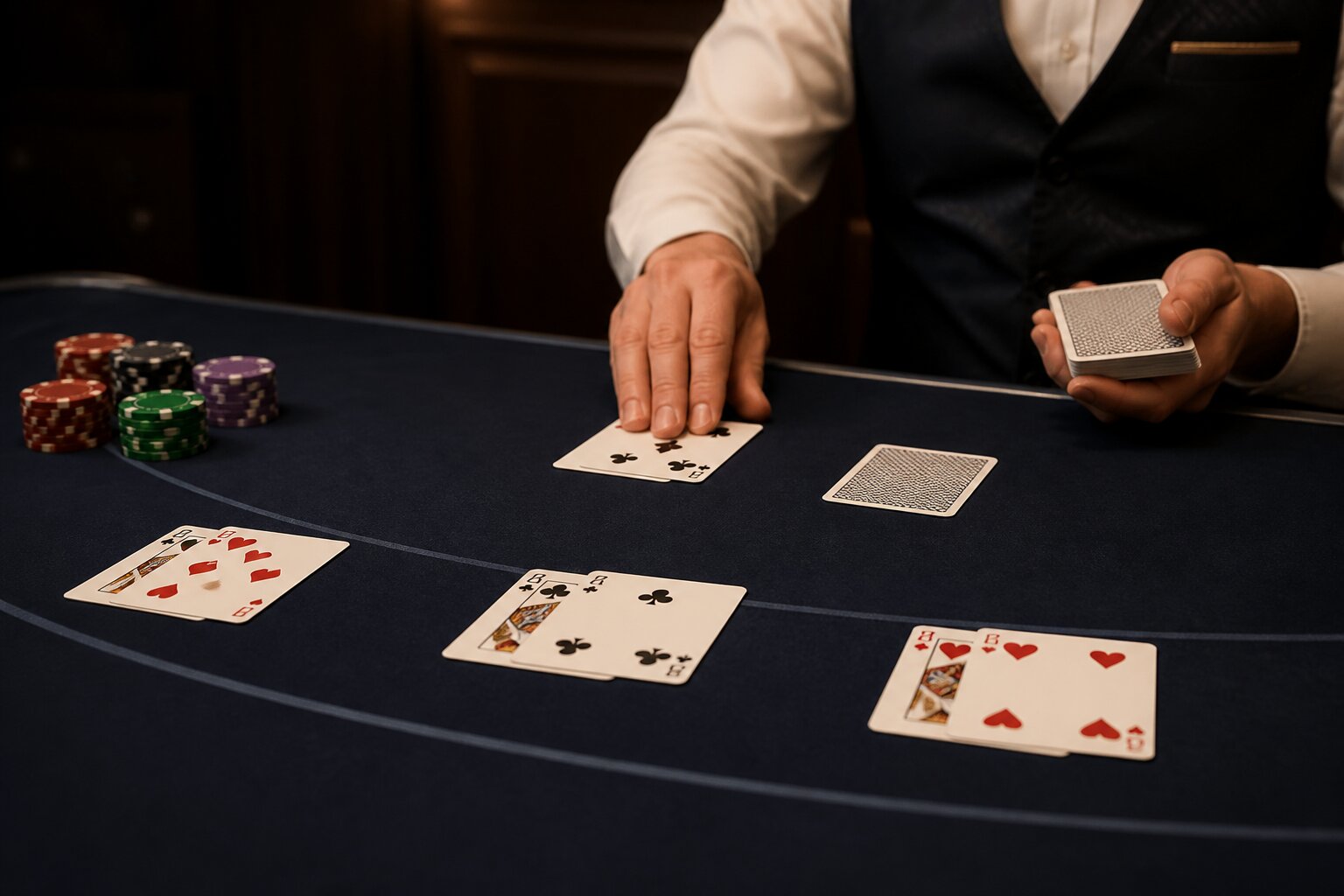
Looking for a fresh twist on a familiar card game? British Blackjack offers straightforward rules and a lively, social feel that make it a popular choice in pubs and at home. Its defining feature is the seven-card element: a player can win by building a hand of up to seven cards without exceeding 21.
This guide explains how the game works, highlights the rules that set it apart from other blackjack variants, and walks through a complete hand so you can see the flow in practice. Read on to get a clear picture of the play and what to watch for at the table.
What Is British Blackjack?
British Blackjack, sometimes known as Pontoon, is a traditional card game played among friends and in casual venues. Unlike many casino versions, one player acts as the banker, and that role usually moves around the table so everyone has a turn.
The game uses a single 52-card deck and keeps the mechanics simple: number cards count as their number, face cards are worth 10, and Aces can be 1 or 11. Special hands such as a Pontoon (an Ace plus a 10-point card) and multi-card tricks — especially the five-card and seven-card hands — give the game a distinctive flavour. The combination of clear scoring and player-banking makes it easy to learn and keeps rounds moving at a friendly pace.
Next, you’ll see how these features compare with other blackjack variants and why British Blackjack tends to feel more relaxed and communal.
How Does British Blackjack Differ From Other Variants?
British Blackjack is recognisably related to standard blackjack, but a few specific differences change how the game plays.
First, the banker is a rotating player rather than a house representative, so each participant not only bets but also takes on the dealing and settling of bets in turn. The terminology also shifts: “Pontoon” replaces the usual “Blackjack,” and players say “Twist” and “Stick” instead of “Hit” and “Stand.” The game typically uses a single deck rather than the multiple decks common in casinos, which affects card distribution and the feel of the deck over several rounds.
These differences make the pace and priorities of play distinct — more about head-to-head results against the banker and less about playing against a fixed house. With that context, the next section lays out the core rules you need to play with confidence.
Core Rules of British Blackjack (7 Cards)
British Blackjack centres on building a hand as close to 21 as possible without going over, while also being aware of special multi-card hands that can outrank ordinary totals.
Card Values & Basic Objective
Card values follow familiar lines: 2–10 are face value, Jacks, Queens and Kings are worth 10, and Aces can count as either 1 or 11 to benefit the hand. The primary aim is to beat the banker’s hand with a value nearer to 21. However, hands that achieve five, six or seven cards without exceeding 21 carry special status and can beat higher single-card totals.
A Pontoon — an Ace with a 10-point card as the initial two cards — ranks above any other 21-value hand. A seven-card hand of 21 or less is typically the highest non-Pontoon win and is celebrated when it occurs.
The Role of the Dealer
The banker manages the deck and pays or collects bets for the round. All hands are dealt face down and remain hidden while players take their actions in turn. Once every player has finished, the banker reveals and plays their hand under the same rules, then compares results against each player to determine wins and losses.
Because the banker rotates, each player gets a chance to influence the table’s rhythm and decisions. With the basics clear, the following example shows how a round unfolds in practice.
Step-by-Step Example: Playing a Hand
A round moves through shuffling, dealing and a series of choices, all while players aim for 21 or one of the special multi-card hands. The narrative below shows a typical flow so you can picture decisions and outcomes without a technical checklist.
Shuffling & Dealing the Cards
The banker shuffles a single deck and offers it to another player to cut. Then each participant, including the banker, receives two cards face down. In a four-player game, the hands might be dealt so that Player 1 has 7 and 5, Player 2 has King and 6, Player 3 has 4 and 9, and the banker holds an Ace and a concealed card.
Player Decisions: Hit, Stand, or Twist
Play proceeds from the player to the banker’s left. Players can twist to take another card or stick to keep their current total. Players must continue to twist until they reach at least 15, except where a twist causes them to exceed 21 and bust. For example, Player 1 with 7 and 5 (total 12) twists and draws a 2 (14), then twists again to receive a 6 and finish on 20; at that point the player will normally stick. Meanwhile, Player 2 with King and 6 (16) may choose to stick or try for a five-card trick by taking more cards.
Each person makes choices based on their hand and the possibility of multi-card wins, and those decisions shape the table’s dynamic until everyone has either stuck, busted, or reached a qualifying five-, six- or seven-card hand.
When Does the Round End?
Once every player has completed their turn, the banker reveals the hole card and plays by the same rules. The round finishes when the banker has resolved their hand and compared it to each player’s hand in turn. Payouts are settled according to the outcomes: Pontoon outranks other 21s, five-card tricks beat ordinary totals, and a seven-card hand of 21 or less generally wins against non-Pontoon hands. With that resolved, the next round begins, typically with the banker position passing on in turn.
The practical example above should make the rhythm of a real round clear; if you still have questions, the next section addresses common points that often come up at the table.
Common Questions About British Blackjack
What is a “Pontoon”?
A Pontoon is the best possible initial hand: an Ace paired with a 10-point card as the first two cards. It outranks other hands, including any five-card tricks. A Pontoon usually pays out immediately, depending on house rules, and ends the round for that player unless specific table variations apply.
What is a “Five Card Trick”?
A Five Card Trick is any hand composed of five cards totalling 21 or less. It beats ordinary numerical totals but is beaten by a Pontoon. For instance, a hand of 2, 3, 4, 5 and 6 totals 20 and qualifies as a five-card trick. Some houses may have special payouts or slight rule differences for five-card tricks, so it is always worth checking the table rules before play.
Do you have to twist on a low score?
Players are expected to twist while their total is under 15; the rule prevents early sticking on very low totals and keeps the game flowing. This expectation helps maintain a steady pace and reduces strategic stalling. As always, follow the specific house procedures at each table.
Can a player choose to show their cards?
Hands are normally kept face down until all play is complete so everyone’s decisions remain private while the round proceeds. Revealing cards early can affect other players’ choices and the overall dynamic at the table, which is why the standard practice is to keep cards concealed.
How does the banker change?
Groups generally rotate the banker clockwise each round or after a preset number of rounds, depending on the house preference, which maintains fairness and keeps the role shared. Rotation ensures that no single player carries the banker’s position for too long, and it spreads both responsibility and opportunity around the table.
Is British Blackjack suitable for young people?
Because British Blackjack involves staking money, it is an activity for adults only. Follow legal age limits and approach play with moderation and awareness of the risks involved. If you are concerned about your gambling or that of someone close to you, seek advice and support from recognised problem gambling services.
With the rules, a worked example and answers to frequent questions covered, you should have a clear sense of how to join a table and what to expect in play. Enjoy the social side of the game and the variety that the five- and seven-card possibilities bring to each round, but remember to play responsibly.
Explore Casino Games at Lion Wins
We’d love to welcome you to our site, where you can enjoy a friendly and relaxed casino experience at your own pace. There’s a place for everyone at Lion Wins, and we’re here to make sure you feel right at home.
**The information provided in this blog is intended for educational purposes and should not be construed as betting advice or a guarantee of success. Always gamble responsibly.