
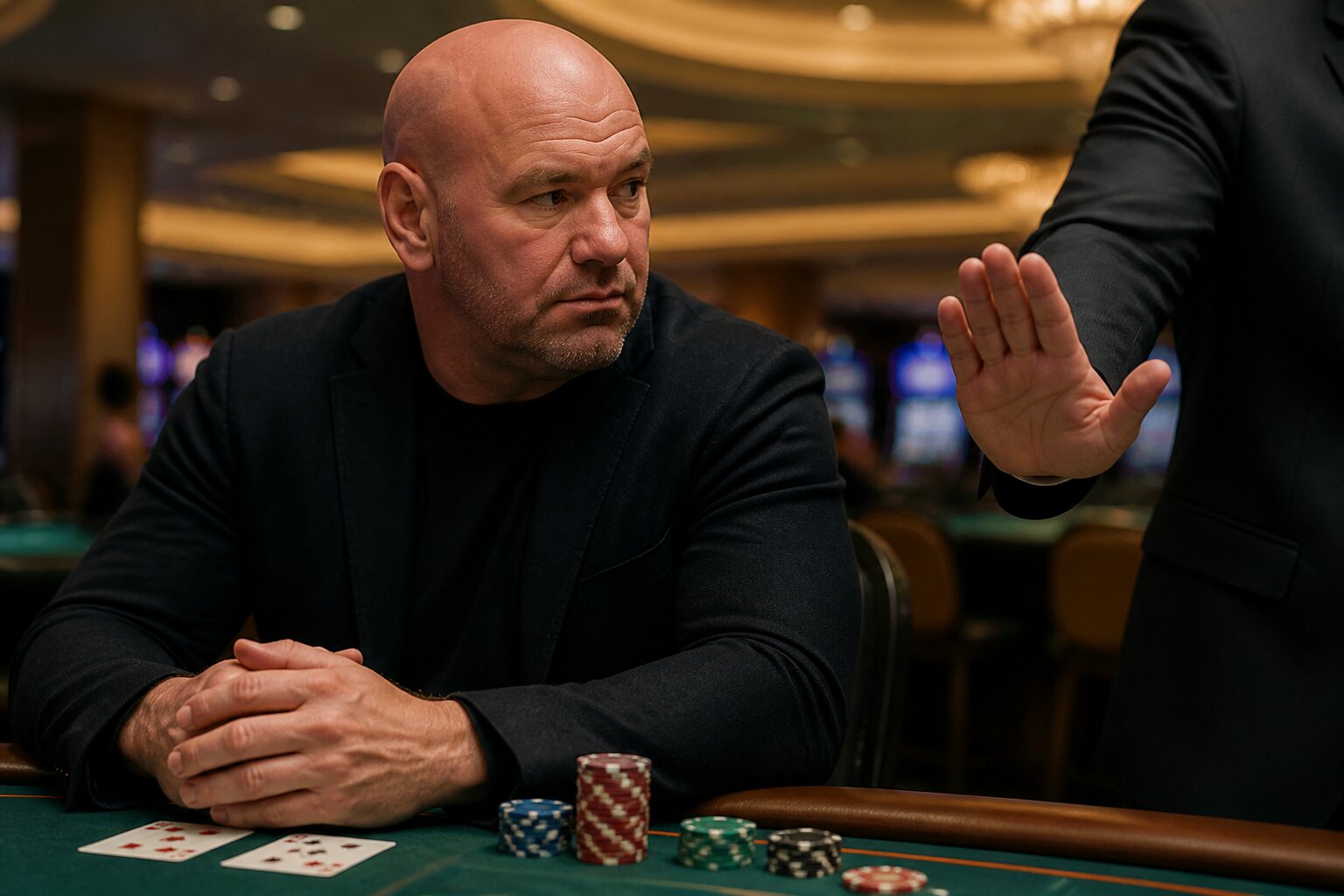
Ever wondered why Dana White, the outspoken president of the UFC, can’t play blackjack in certain casinos? His presence at the tables has produced enough stories to spark curiosity beyond the fight world.
Tales of big wins and dramatic nights make for compelling reading, but they don’t tell the full story. There’s a practical side to casino decisions that explains why some venues choose to refuse service to certain players.
Read on to discover what happened in these incidents, how casinos handle high-stakes customers, and what the wider consequences were.
Who Is Dana White?
Dana White is best known for turning the Ultimate Fighting Championship into a global sports business. He’s a familiar public figure: direct in speech, often in the media, and accustomed to high-pressure situations. That same appetite for intensity has sometimes led him away from the boardroom and toward casino tables.
As a public figure who has spoken openly about playing blackjack, White’s experiences attract attention. But those stories sit alongside industry practices and commercial considerations that influence how casinos manage card games and patrons.
His profile makes the story interesting, and the next section explains why that profile matters at a blackjack table.
Why Does Dana White Play So Much Blackjack?
White has described blackjack as a game that suits his personality: quick decisions, clear outcomes and a competitive edge. The game’s pace and the focus required can appeal to people who enjoy strategic, head-to-head challenges, and that helps explain why he plays frequently.
Blackjack offers an element of skill in decisions such as when to draw a card or stand, and experienced players can develop strategies that affect short-term results. High-stakes play amplifies those decisions, too, because each choice carries a larger financial consequence. That combination of speed, strategy and risk tends to attract players who prefer an active role in how a session unfolds.
Understanding this environment helps clarify why casinos take a close interest in certain players’ activity; the next section looks at how the industry responds.
The Truth Behind Dana White’s Casino Bans
Reports that White was asked not to return to particular casinos centre on one issue: venues assessing a player’s impact on their business. Casinos are private establishments and may refuse service if they judge a guest’s presence to be detrimental to their operations or atmosphere.
In several public accounts, venues acted after consistent, substantial wins at the blackjack tables. Operators assess patterns of play, bet sizes, and behaviour at the table; if these lead them to believe a player poses a financial or operational risk, they may restrict access. These decisions are presented by casinos as part of standard risk management rather than allegations of rule-breaking.
The next section outlines the two perspectives more directly: the industry rationale and White’s own responses.
What Do Casinos Say About the Ban?
From a casino’s point of view, management must guard both revenue and the guest experience. When a player’s behaviour or results appear to threaten those priorities, staff or security may intervene. Such measures can include asking a player to stop a particular game, moving them to a different area, or ultimately refusing future play.
These actions follow internal policies designed to keep games fair and maintain a predictable operating environment. When high sums change hands quickly, venues also consider floor integrity and the expectations of other guests.
Dana White’s Side of the Story
White has publicly acknowledged being told not to return to some venues, attributing the restrictions to his success at the tables. He insists he played by the rules and accepts that casinos have the right to manage their own floors.
That acceptance is part of the wider reality of high-stakes gambling: high-profile players can attract scrutiny, and casinos may respond in ways that prioritise their business model. The following section explains how that dynamic plays out for high-rolling customers more generally.
How Do Casinos Handle High-Rollers Like Dana White?
High-rollers draw attention because they place large bets and can influence a venue’s revenue. Casinos frequently offer tailored services to these customers — for example, private gaming areas, dedicated staff and personalised offers — to encourage repeat visits. Those perks are part of cultivating profitable relationships.
At the same time, operators monitor play closely. Staff observe betting patterns, game outcomes and table conduct, bringing in supervisors if anything seems irregular. Casinos must balance hospitality with the need to protect their bottom line and ensure all tables run smoothly for everyone. This balance can sometimes result in a player being limited or asked to stop playing specific games when management deems it necessary.
Next, we’ll address common misunderstandings about White’s time at the tables and set those against how games actually work.
Common Myths About Dana White’s Blackjack Play
Several persistent myths surround White’s casino appearances. One is that he always wins — a dramatic idea that ignores how casino games operate. Blackjack involves decisions that can influence short-term results, but variance means wins and losses both occur, even for skilled players.
Another misconception is that notoriety guarantees special treatment or different rules. In practice, venues aim to apply their policies consistently; any exceptions are part of negotiated hospitality rather than altered game mechanics.
Finally, it’s worth noting that high-stakes gambling is not inherently more glamorous. Larger bets bring larger swings in outcomes, and the financial exposure is more significant. Maintaining perspective about the risks involved is important when considering the appeal of such play. The next section looks at how these incidents affected perceptions of White himself.
Impact of Casino Bans on Dana White’s Public Image
Stories about casino bans have become part of White’s public narrative, contributing to the sense of him as a bold, competitive figure who operates at the highest levels in several arenas. Some observers view the bans as a natural consequence of high-stakes play, while others treat them as a curious footnote in his career.
Either way, these episodes underscore a broader point about how commercial decisions and personal reputation interact in public life. For a public figure, stories like this can be framed as examples of competitiveness or as reminders of the business considerations that govern private venues.
In the end, the practical effect was limited: the incidents did not imply illegal activity, and they sit alongside other aspects of White’s public profile. That wraps up the ways casinos and players navigate high-stakes environments and what the fallout looked like in this case.
**The information provided in this blog is intended for educational purposes and should not be construed as betting advice or a guarantee of success. Always gamble responsibly.