
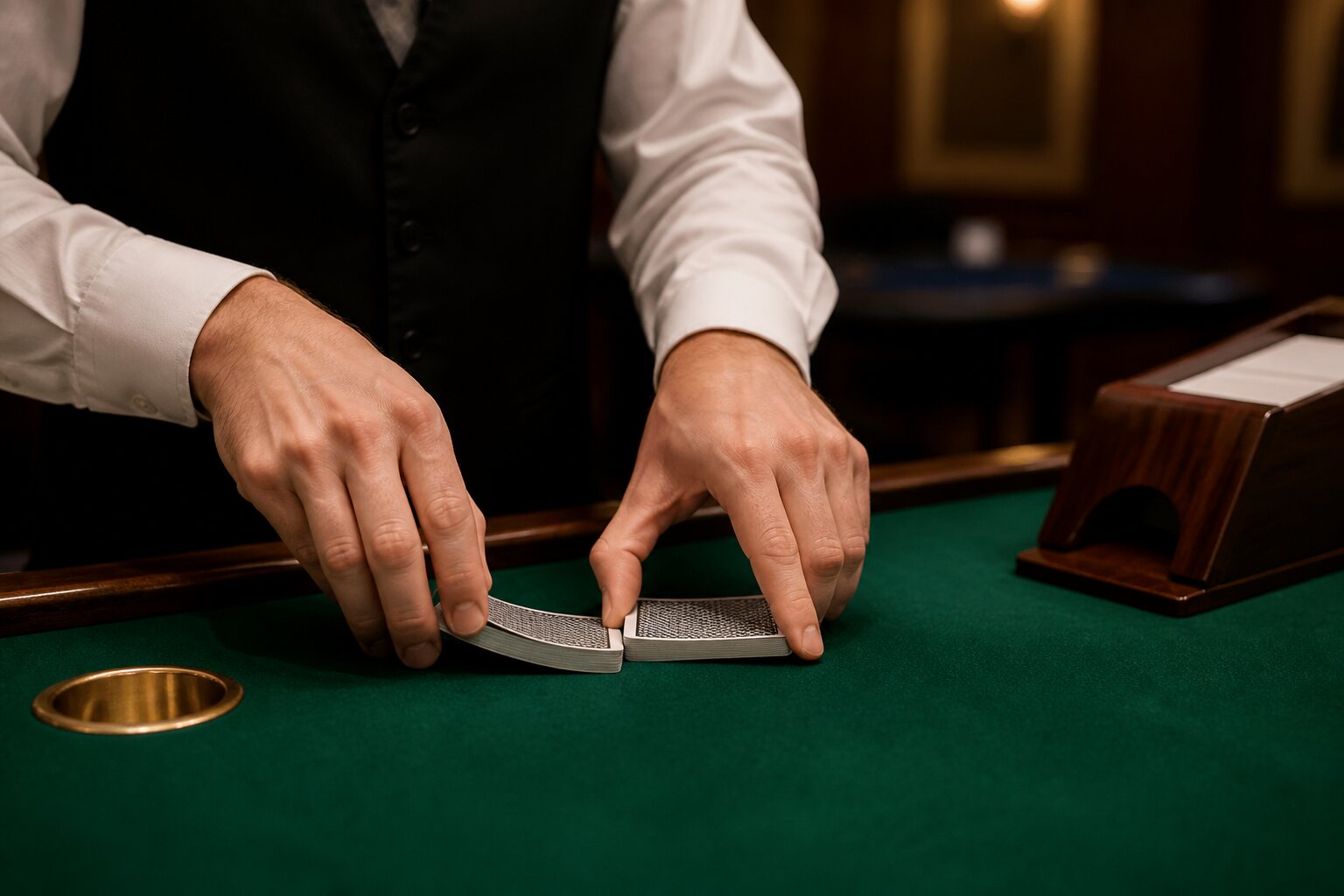
If you’ve ever played blackjack at a casino, you might have noticed the dealer quietly sliding a card under the shoe and discarding it before dealing the rest. That small action often raises questions, particularly from newer players.
Is it a superstition, a trick, or a routine part of the rules? The practice is neither mysterious nor theatrical; it has a clear purpose within the way casinos run the game.
Read on to learn what burning a card involves, why it is used, and how it affects the deal so you feel more confident the next time you sit down at a table.
What Does It Mean To Burn A Card In Blackjack?
Burning a card means removing the top card from a freshly shuffled deck and setting it aside unseen before any hands are dealt. The dealer places the card face down in a discard pile so it cannot be read or reintroduced into play.
This is not a random habit or a ritual. It is a procedural step intended to make the first card of the shoe unknown to everyone at the table. Whether a single deck or multiple decks are being used, the card that is burned is simply excluded from the shoe and does not form part of any hand during that round.
Understanding this basic action makes it easier to see why dealers take the step and what it achieves in practical terms.
How Does The Burn Card Process Work At Casinos?
In land-based casinos the dealer shuffles the decks, checks them for integrity, and then takes the top card from the stack and places it face down in the discard pile before dealing begins. The movement is swift so it does not interrupt the flow of play.
In electronic or online games the software performs the same function automatically. After the virtual shuffle the system removes the top card from the digital deck before distributing cards to players. The underlying idea is identical in both formats: the card is taken out of play and not revealed.
Dealers and systems follow house procedures for when to burn cards, how to display the shoe, and how to handle the discard pile so the operation remains transparent and verifiable in front of players or auditors.
Purpose Of Burning Cards In Blackjack
Burning a card helps preserve the integrity of the deal by ensuring the identity of the first card is not known or exposed. Historically, some attempts to gain an unfair edge involved tracking or marking the initial card, so removing it reduces that possibility.
Beyond preventing direct exploitation, burning a card also prevents an accidental advantage that could arise if the same card were exposed during handling. The practice makes the composition of the shoe less predictable in the narrow sense that no player or dealer has foreknowledge of which card was on top.
In short, the practice is about protecting the shuffle and the dealing process so everyone plays against the same, consistent conditions.
Do Burnt Cards Affect The Game Outcome?
The burnt card is simply excluded from play, so it does not alter the rules or the mechanics that determine results for any hand. All subsequent cards are dealt from the remaining deck and the mathematical structure of the game remains the same.
Players cannot influence or learn what the burned card is, and the removal is applied equally to every participant. While it changes which specific cards remain in the deck for that shoe, this is no different from any other single card being at the top after a shuffle. There is no special effect that benefits the house or a particular player beyond preserving the integrity of the shuffle.
Is Burning Cards A Legal Requirement In UK Casinos?
Burning cards is not something you will find laid out as a statute in law, but regulated casinos adopt it widely as part of their standard operating procedures. Regulatory bodies expect operators to protect fair play and the dealing process, and burning a card is one commonly accepted measure toward that goal.
Rather than a legal requirement in itself, burning is typically incorporated into a casino’s licence conditions and written procedures. These internal rules and training ensure dealers perform the action consistently, helping to prevent accidental or deliberate advantage from predictable card positions or minor imperfections on the top cards.
The practice supports an operator’s duty to maintain transparent and auditable games. Together with measures such as careful shuffling, cut cards and table-side surveillance, burning contributes to a clear paper trail and evidence that dealing was conducted properly. This helps venues meet regulatory expectations for fairness and integrity.
Although the method is widespread in live table games, it is not universally identical across every operator or game variant. If a player is unsure how a particular casino handles burning, staff can normally explain the house procedures.
Common Misconceptions About Burnt Cards
One persistent myth is that knowledge of burnt cards can be used to forecast future cards. Because the card is removed unseen, there is no usable information left for players. Another mistaken belief is that burning cards is a way for casinos to tilt odds toward the house. The step is neutral and applied uniformly, so it does not create a hidden advantage.
Some think remembering or tracking a discarded card could provide insight into the shoe. In reality the card is not shown and does not re-enter play, so there is nothing to observe or exploit. Understanding these points helps dispel the idea that burning is anything other than a basic integrity safeguard.
How Many Cards Are Burnt At The Start Of A Blackjack Shoe?
Most casinos will burn one card when a new shoe is introduced. That is the usual and widely accepted approach. It is especially common with multi-deck shoes, where a single burn card is standard practice before dealing begins.
Rarely, a venue might burn more than one card, but such variations are set by a casino’s specific house rules rather than by any industry-wide standard. The decision can depend on the casino’s dealing procedures or the type of shoe being used, but it remains a local operational choice.
If you want certainty about a particular table or game, the house rules or the table signage will explain the exact procedure. Knowing whether one or more cards are removed is useful for clarity because:
- it tells players what to expect when the dealer starts dealing, and
- it does not change how the game plays or the fairness of outcomes.
In short, the number of burn cards is a procedural detail. It rarely affects strategy and is primarily there to ensure a consistent, transparent dealing process.
Do All Casinos Use The Same Rules For Burnt Cards?
Procedures can vary between casinos and between different variants of blackjack. Some games and bespoke tables adopt slightly different shuffling and dealing practices, which can affect whether a card is burned and how the shoe is managed.
These differences are administrative rather than strategic. They reflect each operator’s choices about dealing procedures, security measures, and how to present the game to players. When you sit at a new table it can be helpful to take a moment to notice the shoe and how the dealer handles the discard pile so you know what to expect.
If you are playing online, the game rules page usually summarises how shuffling and burning are handled by the software, giving you the same reassurance you would get from observing a dealer in a casino.
Conclusion: The Role Of Burn Cards In Fair Blackjack Play
Burn cards are a small but practical part of keeping blackjack orderly and secure. By removing the top card after a shuffle casinos reduce the chance of accidental exposure or attempts to manipulate the deal and ensure the shuffle remains the key determinant of how the shoe plays out.
The practice is routine and applied consistently so players can expect the same dealing standards from table to table. If ever in doubt about a specific table’s procedure, a quick look at the posted rules or a polite question to the dealer will clear it up.
Set your limits and play within them, and you can enjoy blackjack with a clearer sense of how the game is managed and why those little procedural steps matter.
**The information provided in this blog is intended for educational purposes and should not be construed as betting advice or a guarantee of success. Always gamble responsibly.