
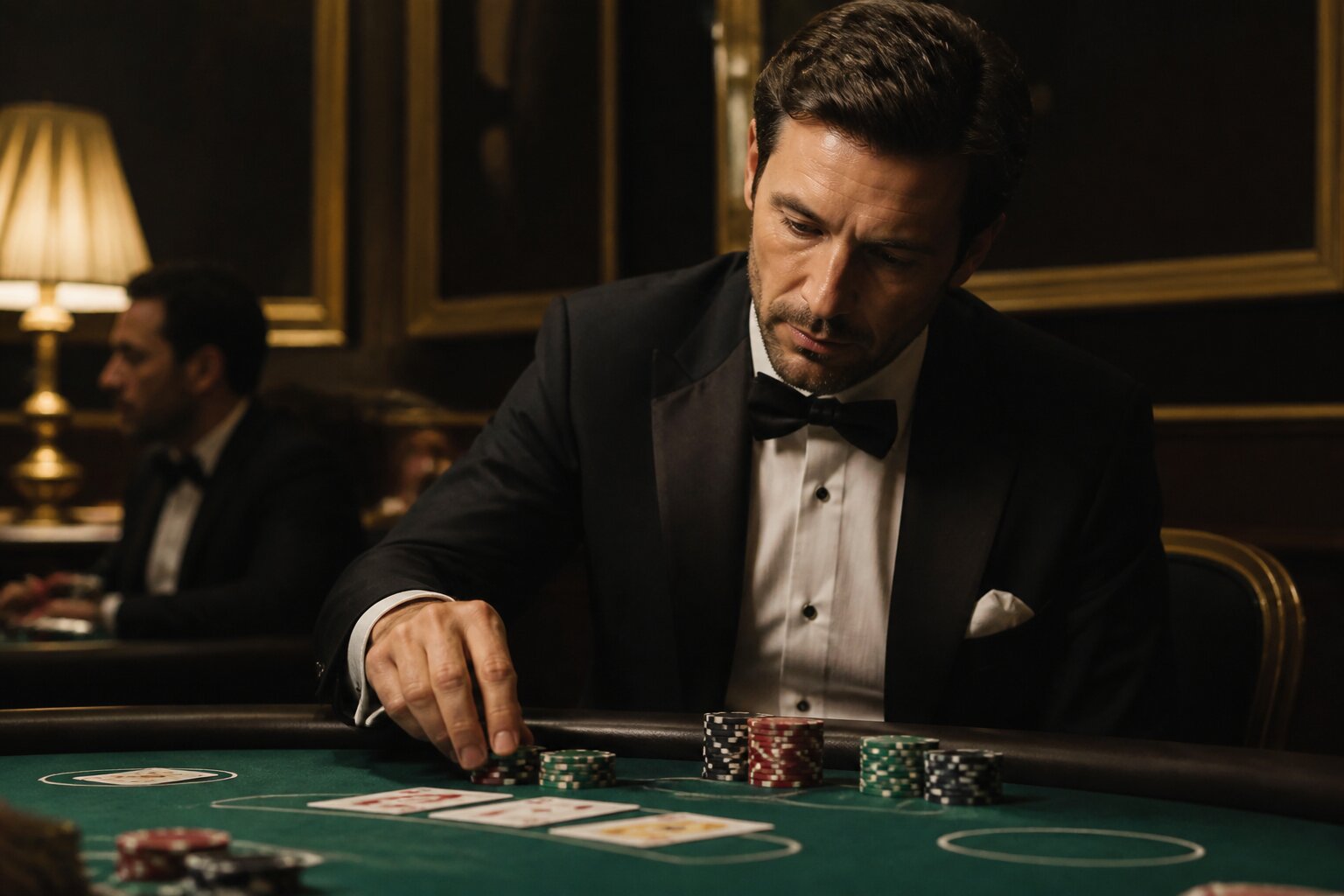
Blackjack has drawn the attention of thrill-seekers, risk-takers, and clever minds for decades. From smoky backrooms to the lights of Las Vegas, players have put their skills to the test in a game where sharp thinking and careful study can make a measurable difference.
A handful of colourful personalities have risen above the rest, mastering strategy and leaving a lasting mark on the game. Their stories are packed with daring plays, strategic innovations, and at times controversy — all of which shaped how blackjack is played and understood today.
Curious to meet the men and women who've become legends at the blackjack tables? Read on to discover the famous names, the techniques they used, and the ways they changed the game.
What Makes A Blackjack Player World-Class?
World-class blackjack players combine analytical skill, disciplined bankroll management, and precise strategic execution. Those elements allow smart decision-making under pressure and help a player extract the best possible expected value from each hand.
Mathematical ability is central. Top players understand the probabilities behind card combinations and how dealer up-cards and remaining deck composition affect outcomes. This knowledge informs choices about when to hit, stand, split or double down, and it underpins more advanced techniques that alter bet sizes or table selection.
Discipline ties directly into preserving long-term play. Elite players set limits for stakes, loss tolerance and session length, avoiding impulsive swings that erode an advantage. That same discipline supports concentration: counting cards or tracking trends demands consistent focus and the patience to sit out unfavourable situations.
Strategy is the connective tissue between calculation and discipline. Some experts developed and taught basic strategy charts that standardised optimal moves for the most common situations, while others experimented with team play, selective table entry and bet-sizing schemes that exploit favourable conditions. Mastery of several strategic approaches, and the judgement to apply each one at the right time, is what separates the most effective players.
These skills do not guarantee a win every session; they change the expected outcome over many hands. Players who aim for longevity respect limits and game integrity, and they manage risk so that skill has a chance to matter. Next, we’ll meet the people who turned these ideas into enduring reputations.
Famous Professional Blackjack Players
Over the years, professional blackjack has produced a number of well-known players, each bringing a distinctive approach to the table. Some became famous through published work, legal challenges, or high-profile wins that highlighted particular techniques.
Hall Of Fame Blackjack Legends
Edward O. Thorp is widely recognised as the pioneer of modern blackjack strategy. His book Beat the Dealer introduced the first rigorous approach to card counting, translating probability theory into practical play and prompting casinos to alter rules and procedures in response.
Ken Uston became known for leading organised blackjack teams and for his public battles with casinos over playing rights. His writing and testimony helped explain team methods—where coordinated play and role specialisation could magnify a skilled player’s edge.
Stanford Wong (John Ferguson) popularised a range of tactical ideas and statistical approaches, including selective entry methods that allowed players to join a table only when conditions turned advantageous. His work emphasised efficiency: how to apply mathematical ideas without attracting unnecessary attention.
These figures not only proved concepts but also forced the industry to adapt, changing the game’s landscape for both players and operators.
Rising Stars & Modern Trailblazers
More recent players have combined technical skill with legal and business acumen. James Grosjean is respected for his analytical writing and for navigating complex disputes over advantage play, showing how knowledge and preparation extend beyond the felt surface.
Don Johnson secured notable success by negotiating game conditions and exploiting favourable rule sets; his story underlines how careful attention to house rules, bet limits and promotions can substantially alter expected returns.
Maria Christina stands out among modern female professionals for her work at the tables and in education, sharing practical insight while emphasising playing responsibly and within one’s means.
These contemporary figures continued the tradition of innovation while also highlighting the importance of context—rules, promotions and dealer procedures all influence how a given strategy performs. The next section looks at the UK scene and how British players have contributed.
Are There Any British Blackjack Champions?
The UK has produced skilled players and contributors who influenced strategy, tournaments and game design, even if they did not all achieve the same level of international fame as some American counterparts. British involvement has tended to emphasise writing, tournament play and game invention rather than large-scale team operations.
Derek Webb, for example, is known more widely for designing casino table games, but his work reflects an understanding of fairness and of how rule variations change player decisions. In tournament circuits and televised events, British players have recorded strong finishes, demonstrating analytical thinking and controlled play under time pressure.
While national styles differ, the essentials remain the same: disciplined bankroll control, sharp mathematical thinking and the ability to adapt to rule changes or new formats. The following section examines how the ideas championed by these players reshaped the game itself.
How Have These Players Shaped The Game?
Influential players transformed blackjack by translating theory into practice and showing how disciplined play affects expected outcomes. Their books and public accounts made sophisticated ideas accessible, moving conversation from folklore to measurable strategy.
Card-counting methods and selective entry prompted casinos to respond with countermeasures—shuffling patterns, multiple decks and dealer rule adjustments—that in turn pushed players to refine tactics. In other words, a continuous feedback loop emerged: player innovation led to rule changes, which led to new approaches among players.
Beyond technical impact, these players raised the game’s visibility. Articles, books and films that featured their exploits broadened interest in blackjack and prompted more systematic study of its mathematics. That scholarly approach continues to inform both recreational players and serious competitors.
Understanding this interplay helps explain why modern play requires both technical skill and the judgement to choose tables and promotions wisely. With that context in mind, the next section clears up some common misunderstandings about famous players.
Common Myths About Famous Blackjack Players
Stories about famous players often take on an exaggerated tone, and a few recurring myths deserve correction. One is the idea that top players are unstoppable; in truth, even skilled competitors experience losing sessions because short-term variance can overwhelm an edge.
Another misconception is that advanced techniques automatically produce large, steady profits. Successful advantage play depends on many factors beyond skill—table rules, deck penetration, bet limits and the level of casino countermeasures all influence whether a method yields a meaningful edge on a given day.
A further myth suggests anyone can reproduce past successes by simply copying a famous player’s methods. That overlooks the lengthy training, psychological resilience and careful money management that underpin professional results. Replicating a technique without the same discipline or context rarely produces equivalent outcomes.
These clarifications point to one simple truth: excellence in blackjack is about preparation and control rather than shortcuts. With that perspective, it’s easier to appreciate what the game’s greats actually achieved.
The Lasting Legacy Of Blackjack’s Greatest Names
The lasting contribution of blackjack’s leading figures is not a record of endless wins, but a body of practical knowledge and a culture of thoughtful play. Their books and analyses remain reference points for players seeking to understand probabilities, betting theory and the effects of rule variations.
They also modelled a measured approach: careful study, disciplined limits and respect for game mechanics. Across decades their work encouraged more rigorous play and better-informed choices by players and operators alike.
Ultimately, the legacy is educational and cultural. These players helped demystify the game, emphasised the importance of risk control, and showed how strategic thinking can enrich the experience. Whether a casual player or a serious student of strategy, there is value in studying their methods and in keeping play within sensible limits.
**The information provided in this blog is intended for educational purposes and should not be construed as betting advice or a guarantee of success. Always gamble responsibly.