
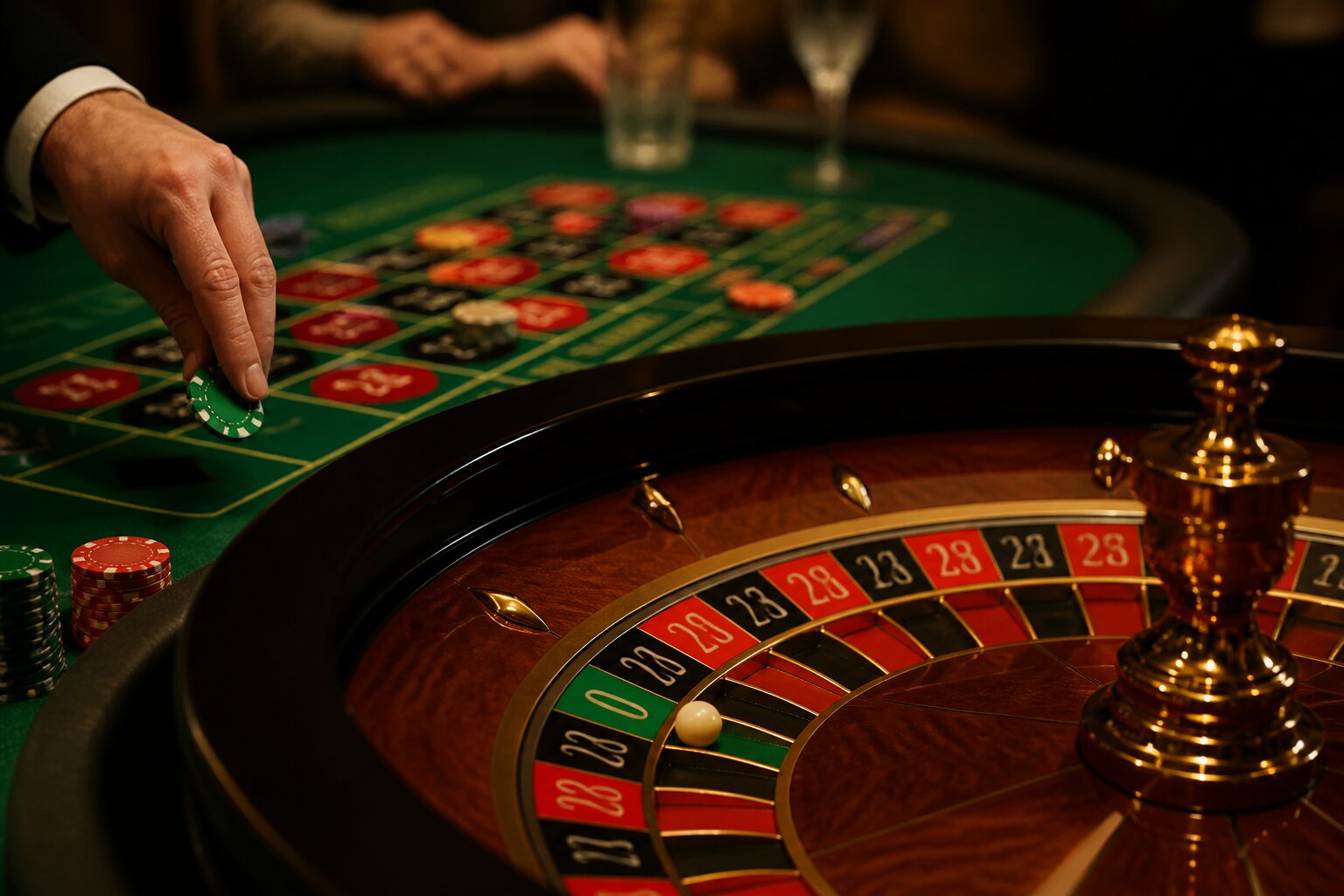
Ever wondered whether betting on zero in roulette could boost your returns or give you a bigger win? Many players overlook the single green pocket, but zero has a clear role on the wheel and can influence how you think about bets.
This guide explains when backing zero might make sense, how it alters the odds and payouts, and what the house edge means for any wager you place. Read on to see how zero fits into the bigger picture and whether it deserves a place in your play.
What Does Zero Mean in Roulette?
The zero pocket sits apart from the red and black numbers and is coloured green so it’s easy to spot. In European and French roulette there is a single zero; on American wheels there are two green pockets: 0 and 00. That simple difference changes the maths behind every bet.
Zero does not count as red or black, nor as odd or even. When the ball lands on zero, most outside bets—such as red/black or odd/even—lose. Only bets that include zero itself win. Because of that, the green pocket is the structural reason the casino retains an advantage over players: without it, the payout rates and true odds would line up more closely with even-money bets.
Understanding this role helps when you consider whether to back zero or to use it in combination bets. The next section shows how often zero actually comes up on different wheels.
What Are the Odds of Zero in European and American Roulette?
The probability of zero depends on the wheel type. European roulette has 37 pockets—numbers 1 to 36 plus a single zero—so a straight-up bet on zero has a 1 in 37 chance, roughly 2.70% per spin. American roulette adds a double zero and therefore has 38 pockets; each of the green pockets (0 and 00) then has a 1 in 38 chance, about 2.63% each.
These percentages are fixed for each spin; previous results don’t change the likelihood of the next outcome. Knowing the raw probabilities helps when you weigh potential payouts against how frequently those payouts occur.
If you want to compare how the two wheel types affect your expected returns, the house edge is the next piece to examine.
How Does the House Edge Affect Zero Bets?
The house edge flows directly from the presence of zero (and double zero on American wheels). In European roulette, that single zero produces a standard house edge of about 2.7%. In American roulette, the extra double zero raises the house edge to roughly 5.26%.
Those figures apply to every bet on the table, including straight-up wagers on zero. Payouts may look generous for a single-number win, but the edge remains the same over many spins. Practically speaking, this means that while individual wins can occur, the average return on money played will sit below the amount staked because the green pocket(s) tip the balance in the house’s favour.
Next, we’ll look at how those payouts are structured when you do hit zero.
Payouts for Betting on Zero Explained
A straight-up win on zero pays 35 to 1, meaning a £1 stake returns £35 in winnings plus the original stake. This payout is identical for any single number on the layout. There are also combination bets that include zero: splits (such as 0/1) pay 17 to 1, and streets covering 0-1-2 return 11 to 1. These lower payouts reflect the wider coverage of numbers with a single chip.
Although the payout for hitting zero can be substantial, the fixed probabilities and house edge discussed earlier mean the long-run expectation is unchanged. The size of the payout compensates for the low chance of success on that particular bet, which is why the mathematics of the game remains balanced in the house’s favour.
With payouts and odds in mind, many players ask whether betting on zero is a sensible choice overall.
Is Betting on Zero Worth It?
Whether betting on zero is worth it depends on what you want from the game. For some players, the appeal lies in the larger single-number payout and the drama of backing one specific pocket. Others prefer wagers that cover more of the table to increase the likelihood of a small win.
From a statistical point of view, a straight-up zero bet carries the same expected return as any single-number bet: low probability balanced by a high payout, with the house edge intact. There is no system or approach that changes that underlying reality. Choosing to back zero is therefore a matter of preference—either you favour the payoff profile of single-number bets, or you don’t.
If you’re uncertain which style suits you, looking at how different bets change variance and payout frequency can be helpful. That brings us to some common misconceptions players encounter.
Common Myths About Betting on Zero
Myth 1: Zero is “due” because it hasn’t appeared recently.
Every spin is independent, so past spins don’t influence future outcomes.
Myth 2: There’s a system that makes betting on zero profitable.
No strategy can overcome the house edge over the long run; systems may change short-term outcomes but not expected returns.
Clearing up these misconceptions should make it easier to choose bets that match your goals and temperament. The next section explains how you actually place a bet on zero at the table or online.
How to Place a Bet on Zero in Roulette
Placing a bet on zero is straightforward. At a live table you place chips directly on the green 0 square; online, you select your chip value and click the 0 box on the digital layout. You can also place combination bets that include zero by positioning chips on the lines between zero and neighbouring numbers for splits or corners.
Knowing how to place the bet is simple; understanding the consequences of that bet for your overall play is the more important part. Before staking money, consider how a zero bet fits with your intended betting pattern and how often you want to seek larger but less frequent payouts.
To keep things safe and responsible, one clear suggestion follows in the final section.
Summary: Key Points on Betting Zero in Roulette
Zero is the green pocket that creates the house edge and sits outside red/black and odd/even groupings. The odds of hitting zero are low—about 1 in 37 on a single-zero wheel and 1 in 38 for each green pocket on a double-zero wheel—and those odds do not change from spin to spin. Payouts for hitting zero are high relative to the stake, but that payoff reflects the low probability of success and does not alter the house edge. No system will reliably overcome that edge.
Set a clear budget before you play and stick to it; roulette is a form of entertainment, not a method of making money. If play ever stops being enjoyable or starts to cause concern, take a break and seek support if needed.
If you’d like, we can look at sample betting layouts or compare expected returns for different bet mixes to help you decide how zero might fit into your approach.
**The information provided in this blog is intended for educational purposes and should not be construed as betting advice or a guarantee of success. Always gamble responsibly.