
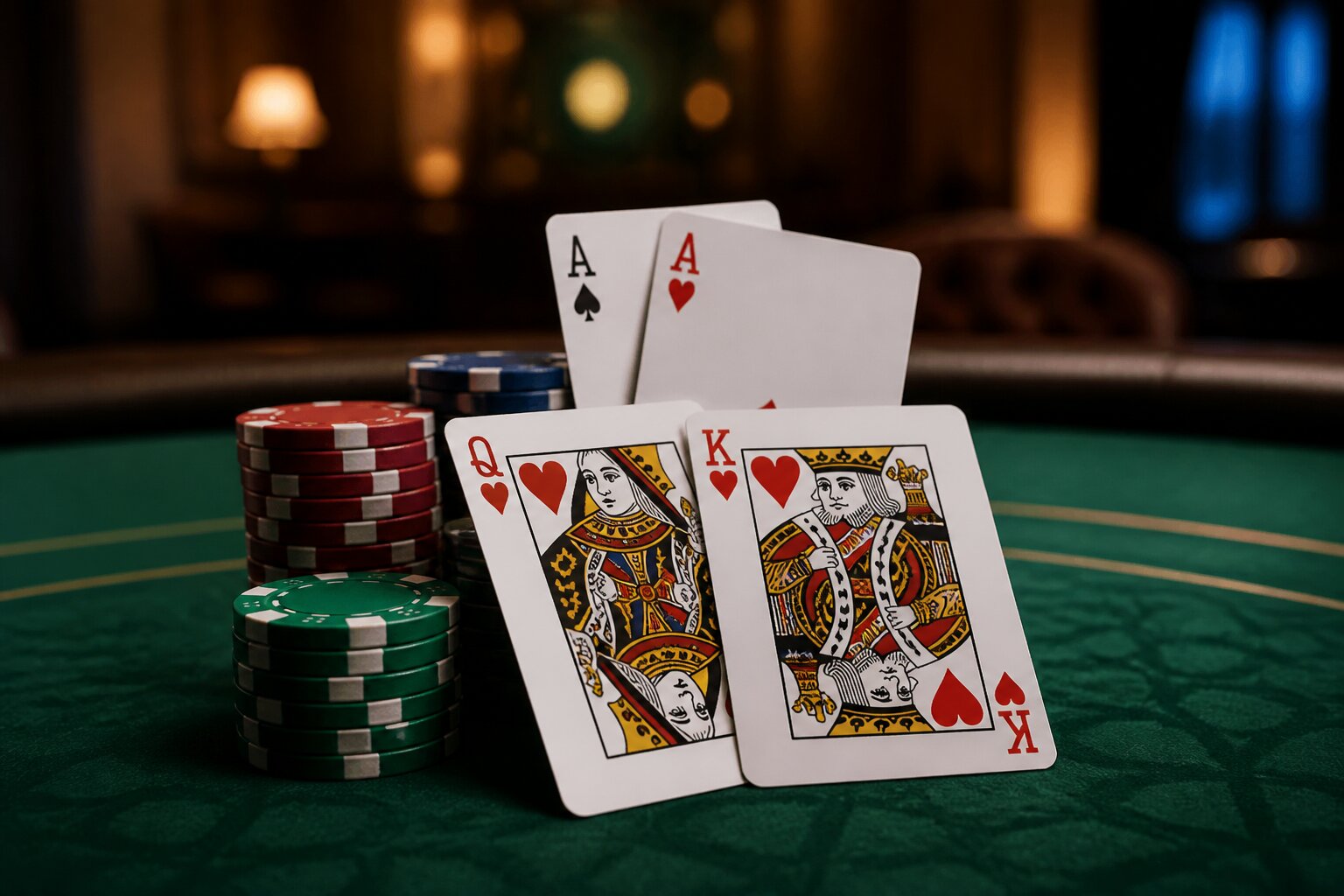
If you enjoy blackjack and like the idea of a poker-style twist, the 21+3 side bet may catch your eye. It combines the three-card poker idea with your first two cards and the dealer’s face-up card, offering a set of special hands and bigger, less frequent payouts.
You’ve probably heard the term “suited trips” and wondered why it’s talked about so much. This article explains how 21+3 works, what suited trips actually are, how payouts and odds stack up, and whether that extra wager might fit your playstyle.
Read on for clear examples and practical context so you can decide if the side bet adds something you’ll enjoy next time you sit at a table.
What Does the 21+3 Side Bet Mean in Blackjack?
The 21+3 side bet is an optional wager placed alongside your main blackjack stake that looks only at three cards: your two opening cards and the dealer’s up-card. It pays when those three cards form specific poker-style combinations such as flushes, straights, three of a kind and suited trips.
This bet is judged independently of the main blackjack outcome; you can win the side bet even if you lose your blackjack hand, and vice versa. Because the side bet evaluates only those three cards, the rest of the round has no effect on its result.
The main attraction is variety: 21+3 introduces different winning lines and higher potential payouts than the main game. That increased reward reflects greater rarity, so it’s important to approach the side bet with that trade-off in mind.
How Are Suited Trips Formed With 21+3?
Suited trips is the top-tier 21+3 hand. It requires all three cards—your two opening cards plus the dealer’s up-card—to be the same rank and the same suit. Unlike a simple three of a kind (which matches rank only) or a flush (which matches suit), suited trips is an exact match on both rank and suit.
Because a standard single deck contains only one card of each rank and suit, suited trips can only occur when multiple decks are used. For example, in a multi-deck shoe it is possible to hold a 6 of hearts and a second 6 of hearts as your two cards, and have the dealer’s up-card also be a 6 of hearts. That precise duplication across the three cards is what makes suited trips so rare.
Suited trips differs from straights and flushes in how exact the match must be. Where a straight cares about consecutive ranks and a flush cares about suit, suited trips demands both the identical rank and identical suit across all three cards—which explains the high payout when it happens.
Payouts & Odds Explained for Suited Trips
Suited trips normally pays the highest amount on a 21+3 paytable because it occurs very rarely. Many casinos list a suited trips payout of 100 to 1, meaning a £1 side bet returning £100 plus the stake. Exact payouts can vary, so always check the table’s paytable before playing.
The probability of suited trips depends heavily on how many decks are in play. With fewer decks it is effectively impossible or extremely unlikely; with multiple decks it becomes possible but remains a long-shot outcome. As a rule of thumb, the chance is well below 0.01% per hand in most common multi-deck games, which translates to odds often measured in the tens of thousands to one against.
These figures explain why payouts are generous: the rarer the combination, the larger the reward required to balance the house edge. That trade-off between occasional big wins and frequent small losses is central to how the side bet functions.
Is the 21+3 Side Bet Worth It?
Whether 21+3 is worthwhile depends on what you want from a session. If you enjoy occasional big payouts and a more varied betting layout, the side bet can add excitement. If your priority is steady, mathematically favourable play, sticking with the main blackjack game generally gives you better long-term odds.
The side bet carries a noticeably higher house edge than regular blackjack, which means over many hands it will cost more on average than the main game. Treating 21+3 as an entertainment option rather than a way to make money helps set reasonable expectations.
If you try the side bet, keep the stake modest relative to your main bet and the session you planned. Monitor your spending and stop when you reach preset limits. If gambling ever feels problematic, support is available from organisations such as BeGambleAware.
Before you decide, consider the paytable, the number of decks used and how the side bet fits with the experience you want at the table.
Common Myths About 21+3 Side Bets
Several misconceptions persist about 21+3 that can lead to poor choices. One is the idea that any particular strategy or betting system will improve the side bet’s inherent odds. Because the outcome rests on the random combination of three cards, no strategy can alter the probability once the cards are dealt.
Another myth is that certain patterns or cold streaks make specific cards more likely to appear; each hand’s three-card combination is an independent event and past deals don’t change the underlying probability for the next one.
Finally, while big wins are possible, they are rare by design. Payouts are set to reflect that rarity, so frequent small losses are the norm for regular play. Knowing these realities helps you decide whether the thrill of chasing a large payout is worth the higher cost over time.
Where Can You Play Blackjack With 21+3 in the UK?
21+3 is a common optional feature at many online and live blackjack tables. Games that offer the side bet display a specific betting area for it on the table layout and include a paytable describing each qualifying hand and its payout.
When choosing a table it’s useful to check the paytable first to see the exact payouts and to confirm how many decks the game uses, since that affects the likelihood of hands such as suited trips. It also helps to pick a table that matches the session length and bet sizes you prefer, so the side bet sits comfortably alongside your main play.
All reputable operators provide information about rules and payouts within each game, and sites often show these details in the game lobby so you can compare options before joining a table.
How to Get Started
Beginning with 21+3 involves selecting a table that lists the side bet and reviewing its paytable and deck configuration. The side bet is placed alongside your main wager, and its result depends only on your two opening cards and the dealer’s face-up card.
Keep wagers at levels that match your budget and plan for the session rather than increasing them in response to short-term results. If you feel your play is getting out of hand, pause and seek advice from support organisations such as BeGambleAware. With clear limits in place, 21+3 can be an occasional addition that brings variety without dominating your play.
**The information provided in this blog is intended for educational purposes and should not be construed as betting advice or a guarantee of success. Always gamble responsibly.