
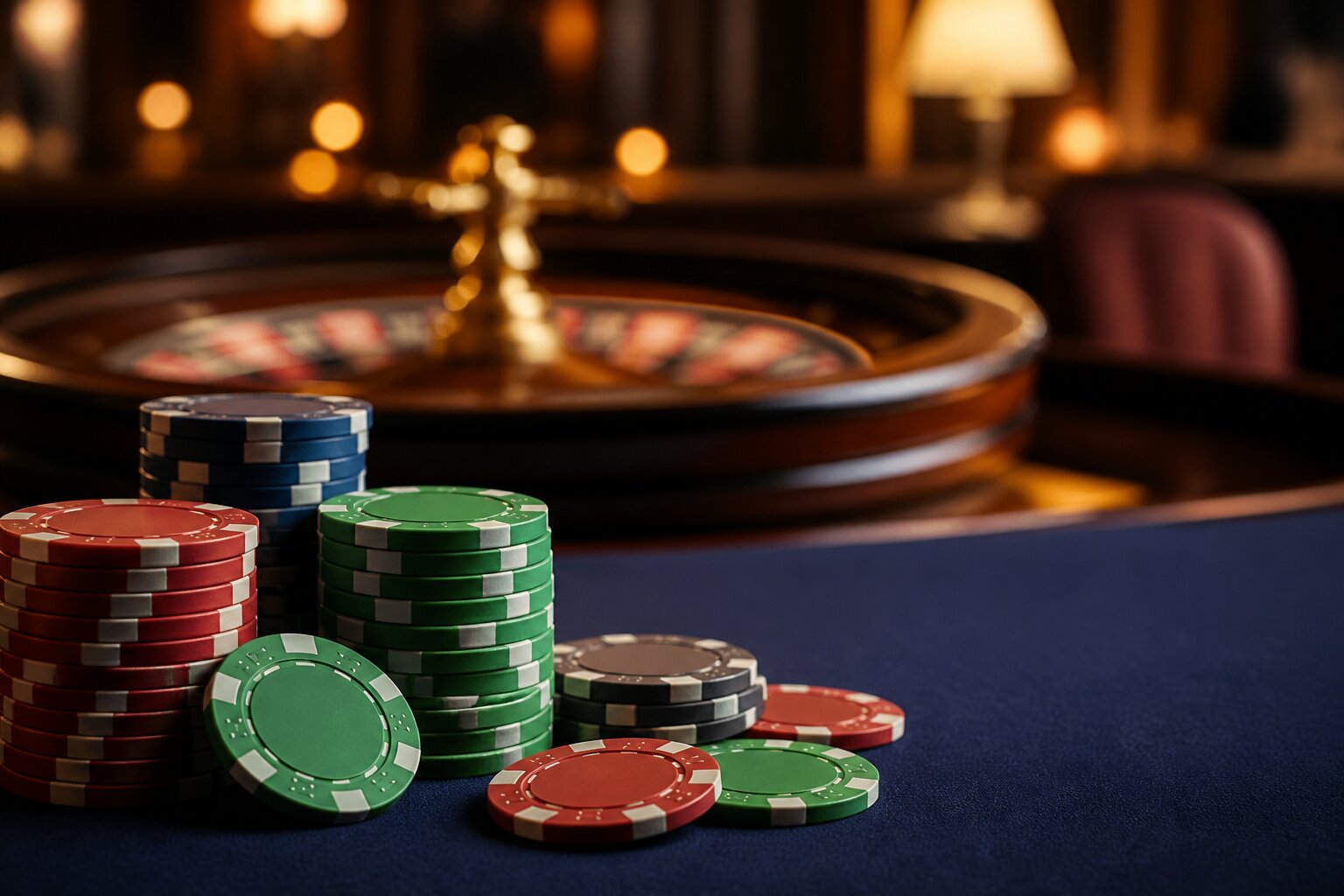
Roulette is one of the most recognisable casino games: the spinning wheel, the clatter of the ball and the range of betting options give every spin a clear point of focus. Many players watch red and black, but the green pockets—the zero and, on some wheels, the double zero—have an outsized effect on how the game plays out.
Those green pockets change the maths behind bets, payouts and the house advantage, so understanding them is essential whether you’re learning the game or refining your strategy. This article explains what the green numbers represent, which bets include them, how payouts and odds differ between wheel types, and common misconceptions to watch for.
What Do the Green Numbers Represent in Roulette?
The green pockets on a roulette wheel mark the zero (0), and on American wheels there is an additional double zero (00). They are visually set apart from the red and black numbers because they don’t belong to the usual betting categories such as red/black, odd/even, or high/low.
European and French roulette wheels have 37 pockets: numbers 1–36 plus the single green 0. American wheels have 38 pockets because they add the 00. That extra pocket is the main reason the two versions offer different odds and a different house edge.
Because green pockets are excluded from the standard outside bets, a spin landing on green affects many wagers simultaneously. This unique role is why the zero(s) are often described as the feature that gives the house its edge.
Which Bets Include the Green Numbers?
Only a small number of bets cover green pockets directly. The most straightforward is the straight-up bet, where a chip is placed on a specific single number—so you can place a straight-up on 0 (and on 00 in American roulette).
Other table bets can include green when the layout allows. For example, a split bet can cover 0 and an adjacent number like 1 or 2, and on American layouts players can cover 0 and 00 with an appropriate split. Some layouts also permit a corner or square bet that groups 0, 1, 2 and 3 together, which gives partial coverage of green alongside other numbers.
Outside bets such as red/black, odd/even or high/low are not inclusive of green. When the ball lands on 0 or 00 these outside bets lose, because the green pockets are intentionally excluded from those broader categories. If you want coverage for the green pockets, you need a bet that specifically lists them or includes them alongside numbered neighbours.
How Do Green Payouts Work in European vs American Roulette?
Payouts for identical bet types are the same across wheel versions, but the underlying chances differ because of the number of pockets. A straight-up win on any single number—including green—pays 35 to 1. That means a successful £1 straight-up returns £35 in winnings plus the original stake.
The critical difference between European and American roulette is that American roulette includes a second green pocket. While the payout for a straight-up on 0 or 00 remains 35 to 1, the likelihood of hitting any single number is slightly lower in American roulette because there are 38 pockets instead of 37. That extra pocket doesn’t change payouts, but it does increase the house advantage over time.
So the effect is subtle in a single spin—same payout, different probability—but over many spins the extra green pocket in American roulette produces a measurable increase in the house edge.
What Are the Odds of Landing on Green?
The chance of the ball landing on green depends on which wheel you’re playing.
- On European roulette there is one green pocket out of 37, so the probability of any spin landing on 0 is 1 in 37, about 2.7%.
- On American roulette there are two green pockets out of 38, so the combined probability of landing on 0 or 00 is 2 in 38, roughly 5.26%.
Those figures show that while a green outcome is more likely in American roulette in absolute terms (because there are two green pockets), the probability of any particular numbered pocket coming up is always based on the total number of pockets on the wheel. That difference in denominator is what shifts the overall odds between the two wheel types.
How Much Can You Win with a Green Bet?
A straight-up bet on a green number pays 35 to 1, which is the same ratio used for any single-number straight-up bet. If you place a split that includes a green pocket and win, the payout is 17 to 1. A corner bet that includes green alongside three neighbouring numbers pays 8 to 1.
Because these payouts are fixed by bet type, the potential return depends on two things: the bet you choose and the stake size. For example, a £5 straight-up on 0 would return £175 in winnings plus the £5 stake if it hits; a £5 split including 0 would return £85 plus the stake. Those numbers make clear how the payout scales with risk—single-number bets offer a bigger return for a lower probability, while grouped bets reduce variance but also lower the headline payout.
What Is the House Edge on Green Bets?
The house edge is the expected long-term advantage the casino holds on each bet, including bets that cover green pockets. Because the wheel’s composition determines both payout and probability, the house edge differs between the two common wheel types.
- In European roulette (single zero) the house edge is approximately 2.7%. That figure applies to all straight-up single-number bets, including 0.
- In American roulette (double zero) the house edge rises to about 5.26% because of the extra green pocket.
To put that into context: over a very large number of spins the operator’s expected retention from each £100 wagered aligns with these percentages. The difference between 2.7% and 5.26% is the practical reason many players prefer single-zero wheels when they have the choice.
It’s sensible to think of these percentages as part of the game’s design rather than a short-term outcome; they describe long-term averages, not what will happen on a particular spin.
Common Myths About Betting on Green Numbers
There are a few persistent misconceptions about green pockets and their effect on play. Clearing them up helps you read the table with clearer expectations.
Myth 1: Green Numbers Are "Due" After a Long Red or Black Streak
Some players expect green to appear after a long run without it. Each spin is independent from a probability standpoint; previous results don’t change the mathematical chance of future outcomes. Patterns may feel meaningful in the moment, but the odds for the next spin remain set by the wheel’s pockets.
Myth 2: Betting on Green Means Bigger Wins
A straight-up on green does offer a high payout relative to outside bets, but that higher payout corresponds to a lower probability of success. The payout level reflects the risk inherent in betting on a single number, not any extra value attached to green itself.
Myth 3: Green Numbers Even the Odds
Some think that betting on green somehow restores balance or reduces the house’s advantage. In reality, the house edge is determined by the wheel’s structure and the fixed payout ratios. Including green in a bet changes the scope of what you cover, but it does not alter the underlying edge the operator holds.
If you keep these points in mind, you can make clearer choices about which bets to place and why. Play with awareness of the maths, choose the wheel and bet types that match your preferences, and treat roulette as a structured game with predictable long-term characteristics. This will help you enjoy the experience while keeping your expectations realistic.
**The information provided in this blog is intended for educational purposes and should not be construed as betting advice or a guarantee of success. Always gamble responsibly.