
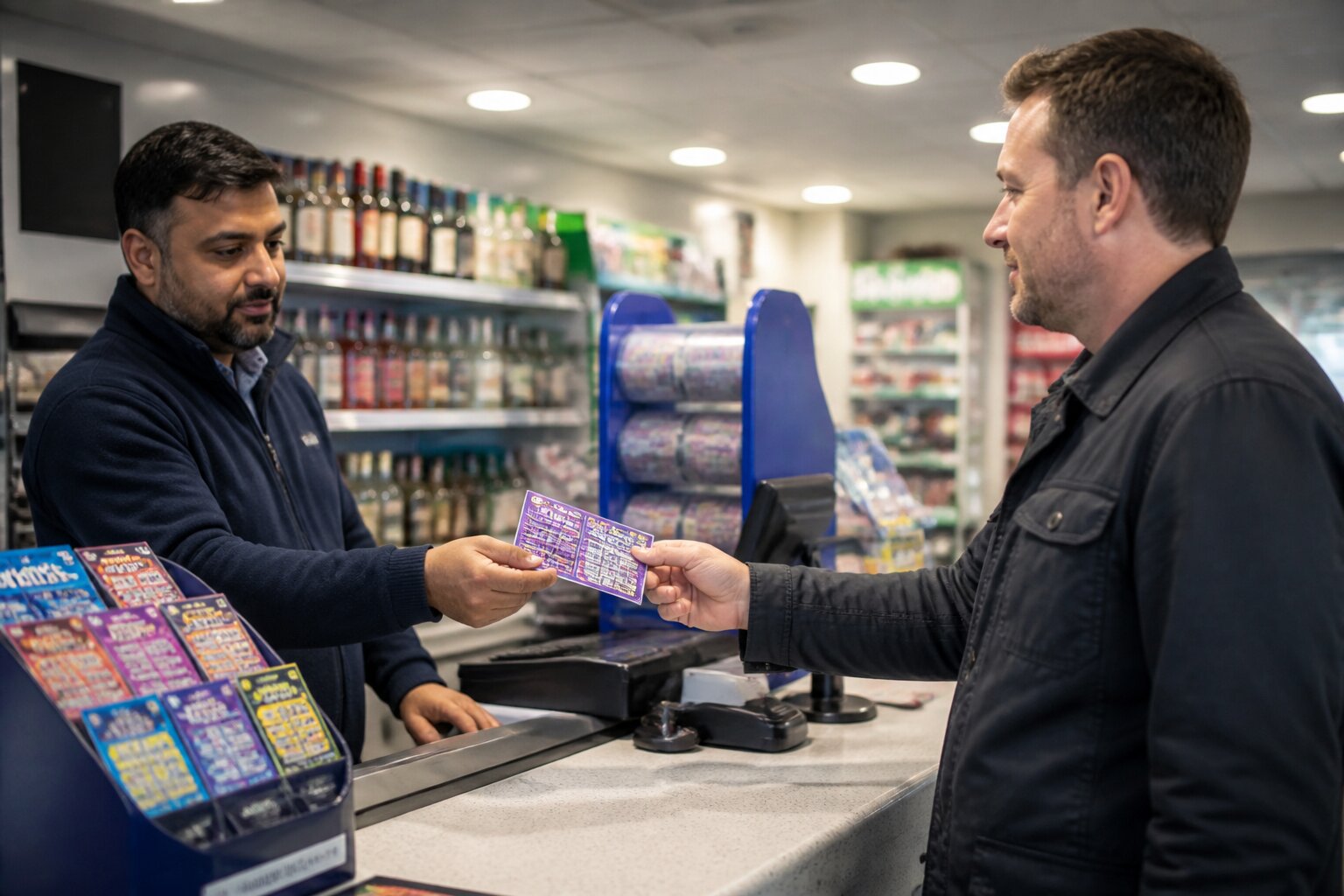
Scratch cards are a quick, accessible way to take part in lottery-style play, and many people buy them as a spontaneous purchase at the shops. Knowing when they can be sold and when a prize can be cashed helps avoid surprises at the counter and makes the whole experience smoother.
This guide explains how scratch cards reach retailers, what to expect when you present a winning ticket, and how prize size affects how and when you get paid. Read on to learn the practical details that matter when you visit a shop.
How Are Scratch Cards Sold in UK Shops?
Scratch cards reach shops through secure, authorised distribution channels operated by licensed providers. Retailers that sell these cards must be registered with the operator, and stock is tracked with serial numbers from distribution to sale to protect against theft and fraud.
In practice, cards are stored in secure displays or behind the counter so staff control access. When a customer wants to buy a card, a member of staff must serve them and check they are at least 18. Shops typically follow a “Think 25” approach, asking for proof of age from anyone who looks under 25. Self-service checkouts are not used for scratch card sales.
Displays and promotional material in shops are required to avoid appealing to underage people or implying unrealistic outcomes. Staff receive regular training to ensure sales are handled in line with regulations and company procedures. This setup keeps the sale process accountable and helps protect both customers and retailers. You’ll find it useful to know how sales are managed before exploring where and how you can cash a winning card.
Where Can You Cash Scratch Cards?
Winning cards can be cashed at authorised retailers that sell the same product. For lower-value prizes, many high-street shops and independent newsagents will pay on the spot, subject to the retailer’s cash limit. Shops require the original winning card and may ask for proof of age.
If a prize exceeds the retailer’s payout limit, the operator’s claims process must be used. That usually involves submitting the winning card by post or visiting a designated claims centre, where further checks and identity verification take place before payment is made.
Retail policies can differ, so it’s sensible to check with the shop before you travel for a payout. Knowing whether a prize can be handled immediately or needs a formal claim will save time and set the right expectations for collecting your winnings. The next section explains how quickly retail payouts typically happen.
Can You Cash Scratch Cards Instantly?
Whether a scratch card can be cashed instantly depends on the prize size and the retailer’s policy. Smaller prizes are commonly paid at the till within minutes if the shop has sufficient cash and the ticket is intact. Staff will verify the ticket and may request ID if appropriate.
For larger prizes, retailers are generally unable to pay directly. Those wins must go through the operator’s claims process, which includes verification steps and identity checks; this naturally takes longer. Even where a shop offers higher instant payout limits, payments are always subject to confirmation that the card is genuine and has not been tampered with.
These safeguards ensure payouts are processed securely and correctly. With that in mind, the following section covers typical cashing times you can expect across retailers and how opening hours and staffing can affect the process.
Typical Cashing Times Across Major Retailers
Cashing times vary with store opening hours, staff availability and the size of the prize. For small wins, a payout might take only a few minutes during normal trading hours when the customer service desk or tills are staffed. Independent shops can often process small claims just as promptly, although their individual cash limits and staffing levels may differ.
When a prize exceeds a shop’s limit, additional steps are required that lengthen the process: the ticket may need to be checked by the operator, posted in for processing, or taken to a claims centre. Verification procedures for larger prizes can add several days to the timeline while identity and ticket authenticity are confirmed.
Busy periods can slow even straightforward payouts, so presenting the ticket during quieter hours may speed things up. Understanding these timeframes helps set realistic expectations for receiving any prize.
What Identification Is Needed To Cash A Scratch Card?
Retailers must confirm that anyone claiming a prize is at least 18 years old. ID is usually requested from anyone who appears under 25, with commonly accepted documents being a valid photo driving licence, passport, or an accredited proof of age card. These forms of ID show a photograph and date of birth, enabling quick verification.
For larger claims handled by the operator or at a claims centre, further documentation will often be required to prove identity before funds are released. This might include photocopies of ID and a signed claim form. These checks protect against fraudulent claims and help ensure prize payments reach the correct person. With identification requirements understood, it’s useful to see how prize size specifically affects cashing times.
Do Scratch Card Cashing Times Differ by Prize Amount?
Yes — the prize amount is a key factor in how quickly a claim is resolved. Lower-value prizes are usually paid in-shop within minutes, provided the retailer has sufficient funds and the ticket is valid. These quick payouts are designed to be convenient for customers and straightforward for staff to process.
Higher-value prizes trigger a more formal claims procedure. The operator or a dedicated claims centre will perform checks on the ticket’s authenticity, confirm the claimant’s identity, and arrange payment through secure methods. Because these steps are essential to prevent fraud and ensure the correct person receives the prize, the process can take several days or sometimes longer.
These different pathways reflect a balance between convenience for routine claims and necessary safeguards for larger payments.
What Happens If a Shop Refuses to Cash a Winning Scratch Card?
If a retailer refuses to pay a claimed prize, the reasons can include the prize exceeding the shop’s payout limit, insufficient cash at the premises, a damaged or unclear ticket, or the shop not being authorised to pay that particular product. Staff may also delay payment pending identity verification.
When this occurs, the ticket will include instructions on the correct claims process and contact details for the operator’s customer service. That route will clarify whether the card must be posted in, taken to a claims centre, or handled another way. If the customer believes their claim was unfairly refused, the operator’s complaints process is the next avenue; details are provided by the operator and on the ticket. If a satisfactory resolution cannot be reached, further recourse through the regulator or an approved dispute-resolution service is available.
These procedures are in place to make sure valid claims are paid while protecting both customers and operators.
Common Misconceptions About Scratch Card Payouts
Several persistent misunderstandings surround scratch card payouts. One is that shops must always pay out every winning card immediately; in truth, shops have payout limits and may not be able to pay large prizes or lack sufficient cash. Another myth is that damaged tickets are automatically invalid; in practice, operators assess whether essential information is still legible before deciding. It is also incorrect to assume any retailer can cash any type of winning card — authorisation and product matching matter — and identification is often required, particularly for higher-value claims.
Clear rules and verification processes protect the integrity of the system while making sure genuine winners receive their payments. With this clarity, you should feel better prepared for what to expect when buying or presenting a winning scratch card.
**The information provided in this blog is intended for educational purposes and should not be construed as betting advice or a guarantee of success. Always gamble responsibly.