
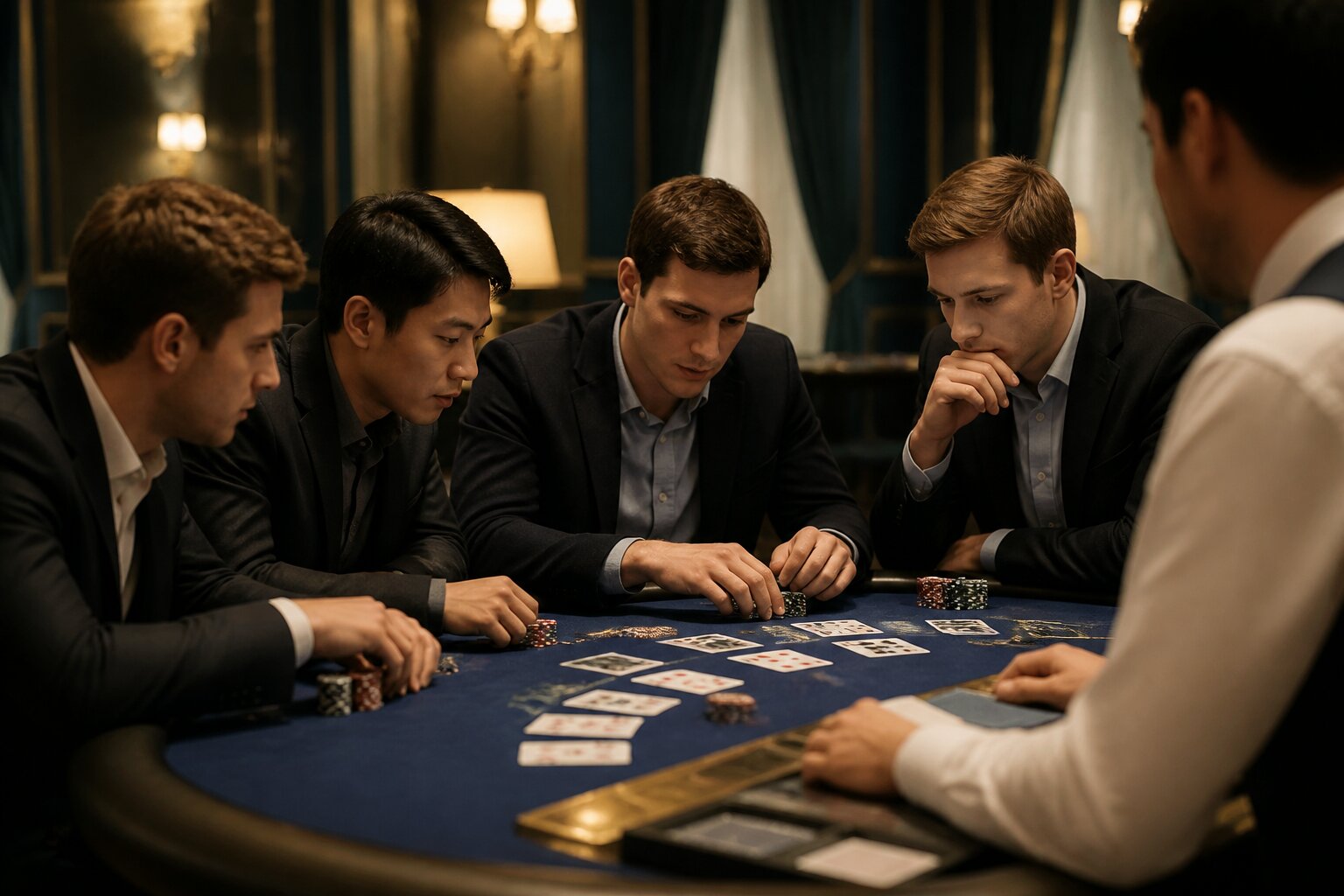
Ever wondered what happens when a group of brilliant maths students apply rigorous analysis to casino card games? The story of the MIT Blackjack Team reads like a thriller—secret signals, coordinated shifts, and carefully calculated stakes.
They turned card counting into a disciplined system and, for a while, made significant profits from tables across the United States. If you want to know who was involved, how they worked, and where they went afterwards, this article walks through the key facts, separating myth from verified detail.
Keep reading to learn about the real people, their methods, and the legacy they left behind.
Who Were the MIT Blackjack Team Members?
The team was largely drawn from students and graduates of MIT, with a few participants from other universities. Membership changed over time; the operation was organised and layered, with distinct roles for training, scouting and play.
Bill Kaplan took a central leadership role, organising finances and coordinating trips. J.P. Massar was an early organiser and trainer involved in recruitment and technique development. John Chang moved into management and training roles as the project expanded. Players such as Laurie Tsao and Mike Aponte alternated between roles like spotter, big player and manager depending on the trip’s needs.
Beyond the well-known names, the operation relied on many less-publicised contributors: spotters who watched multiple tables, trainers who drilled accuracy and timing, and managers handling logistics and cash flows. That networked structure is a big part of why the team’s efforts produced notable results over several years.
How Did the MIT Blackjack Team Operate?
Their approach combined probability, teamwork and strict procedures. Card counting itself is a method of tracking the composition of the remaining deck to estimate how favourable the cards are for the player at a given moment. The team turned this into a coordinated system to increase bet sizes only when the statistical situation was in their favour.
Members assumed specific roles. Spotters played many hands with small bets while keeping count; when a count became favourable, a “big player” would join and place larger bets. Managers kept records, organised travel and ensured players followed the agreed strategies. Regular practice sessions enforced accuracy, speed and consistent signalling so errors and suspicious behaviour were minimised.
Casinos reacted to these methods by tightening surveillance and changing procedures. In many jurisdictions, including the UK, operators explicitly prohibit coordinated advantage play and will refuse service to players who employ team-based counting strategies. That regulatory and operational response made sustained activity increasingly difficult over time.
What Were the Team’s Winnings?
Estimates from interviews and contemporary reporting indicate the team won significant sums across its active years, with total figures often cited in the millions of dollars. Individual weekends could produce returns ranging from tens of thousands to several hundred thousand dollars for the group, depending on conditions, bankroll and table availability.
These figures reflect an organised, high-volume approach: many trips, multiple teams operating in parallel, and a financial structure that pooled capital and distributed winnings. Variability was high—some ventures produced strong returns while others produced losses. The reported totals are aggregates built up over years rather than single, catastrophic payouts.
It’s worth noting that these results were achieved through disciplined investment in training, careful bankroll management, and meticulous record-keeping—factors that are hard to replicate without the same scale and operational control.
Where Are the MIT Blackjack Team Members Now?
After their time with the team, most members moved into mainstream careers. Bill Kaplan continued in business, applying his organisational and financial skills to running companies. John Chang has worked in consultancy related to gaming and decision-making, speaking publicly about risk and strategy. Mike Aponte focused on education and personal development while occasionally consulting.
Other former members went into finance, technology, startups or academic fields, using the analytical, teamwork and risk-management skills they honed during their blackjack years. Many have preferred private lives away from media attention, so public information varies from person to person.
Their post-team careers underline how the project functioned as a formative experience: it was less a lifestyle and more a finite, intensive activity that helped some participants launch other professional paths.
Did the Team Really Break the Bank?
The phrase “break the bank” inflates what actually happened. Casinos prepare for high-value players and have systems to manage payouts and risk. The MIT team’s profits were substantial in aggregate but did not bankrupt casinos. Their wins were spread over many visits and venues, which is how casinos were able to absorb them without collapse.
Many dramatized accounts compress timelines, amplify stakes and gloss over losses and logistical costs. In reality, the team’s successes depended on careful planning, capital to sustain variance, and the ability to move between casinos without drawing excessive scrutiny.
If you’re curious about how this evolved into popular stories and films, the next section looks at the myths that grew up around their activity.
What Myths Surround the MIT Blackjack Team?
Popular portrayals have introduced several persistent myths. One is the idea of a foolproof, clandestine system that guarantees wins; in truth, card counting merely shifts expected value slightly in the player’s favour at certain moments, and it does not eliminate variance or risk. Another myth is that anyone can learn the system quickly and reap the same rewards; former members consistently emphasise the hours of practice, the teamwork required and the financial backing needed to sustain swings.
Films and books have also condensed timelines and merged characters for dramatic effect, so some published scenes are fictionalised or exaggerated. That said, these stories helped draw attention to the technical skill and organisational complexity behind the real operation, even if some details were embellished for entertainment.
Understanding where fact ends and fiction begins helps explain why the MIT team became a cultural touchpoint without being a simple template for replicating their results.
Why Did the MIT Blackjack Team Disband?
A combination of external pressure and internal practicalities led to the end of the organised effort. Casinos improved detection and enforcement, identifying and banning players who used coordinated strategies. The operational burden of managing travel, funds and personnel became heavier as countermeasures increased.
Individual choices also mattered. Members graduated, changed careers, or prioritised family and stable employment. The balance of reward versus effort shifted as detection became more effective and as the business risks of continuing rose.
Regulatory and casino responses, including refusal of service for coordinated advantage play in many licensed venues, made continued success far harder to sustain.
How Has the MIT Blackjack Team Influenced Popular Culture?
Their story has had a lasting cultural footprint, inspiring books, films and documentaries that mix technical detail with dramatic storytelling. Ben Mezrich’s Bringing Down the House and the film 21 are the most widely seen examples; both dramatise and fictionalise elements to create a compelling narrative rather than a strict historical account.
Documentary features and interviews with actual team members have provided clearer accounts of the methods, the discipline involved and the personal costs. These pieces tend to highlight the mathematics and organisational side more than Hollywood adaptations do.
The team’s legacy is twofold: it showcased how mathematical thinking and teamwork can be applied in unexpected arenas, and it sparked wider public interest in probability, risk management and the ethics of advantage play. While the cinematic versions emphasise glamour, the factual record points to a complex, often costly enterprise.
If you’re interested in reading firsthand perspectives, several former members have spoken publicly in interviews and panels that illuminate the operational realities behind the headlines.
Remember that regulation and operator policies have changed since the team’s heyday, and the environment for any coordinated advantage play today is very different from the 1980s and 1990s.
**The information provided in this blog is intended for educational purposes and should not be construed as betting advice or a guarantee of success. Always gamble responsibly.