
Ever wondered if your group is big enough to play poker—or maybe even too big? Whether you’re planning a cosy night in with friends or arranging a club session, the number of players at the table shapes how the game feels and flows.
The right player count influences everything from the pace of play to how much space each person needs. Read on to learn practical guidance on table size, seating and table choices so your next game runs smoothly and everyone enjoys the evening.
What Is the Ideal Poker Table Size for Your Game?
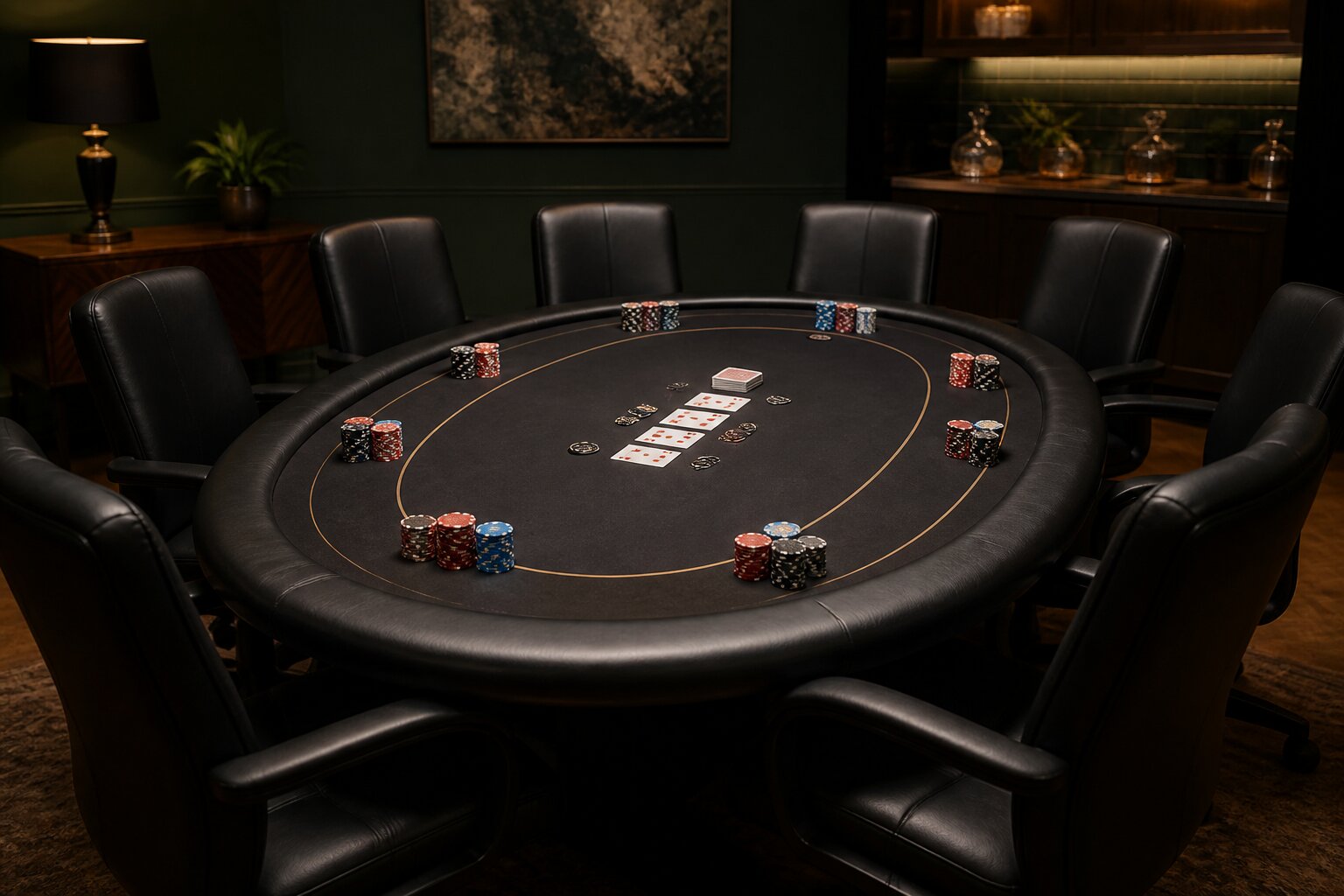
Choosing the right table size matters for comfort, clear sight lines and a smooth playing rhythm. For most home games, six to eight players around an oval or round table hits a sweet spot: there’s enough action to keep hands interesting but not so many people that turns become long and attention drifts.
Smaller groups, such as two to six players, work well at a round dining table or a compact poker table; the closer arrangement keeps conversation flowing and makes it easier to read the action. Conversely, a full-sized oval table suits up to ten players and is what you typically see in venues where the game needs to accommodate a larger crowd without feeling cramped.
Picking the right table size also reduces physical discomfort that can distract players and affect how the game plays out. With that settled, the next section looks at how seating is normally arranged so everyone has a fair view and equal access to the game.
Standard Poker Table Seating Arrangements
Seating is more than placing chairs around a table; it determines how easily players can reach chips and community cards, how clear the dealer can be when handling the game, and how inclusive the table feels.
In an oval layout, seats are spaced evenly so each player has similar access to the centre of the table. Home setups often mimic this pattern on a smaller scale, using round or oval tables with six to eight chairs so each person has room for chips and cards without crowding. The dealer’s position, whether a dedicated seat or a rotating role, should allow them to manage cards and chip movement without obstruction.
Good seating helps keep the game transparent and comfortable for everyone. Next, we’ll compare common table shapes and what each one brings to the playing experience.
Common Poker Table Shapes & Their Pros and Cons
The table’s shape influences how many players fit comfortably and how they interact. Both oval and round tables are popular for different reasons, and the choice often depends on space, group size and the tone you want for the evening.
Oval vs. Round Poker Tables
Oval tables are standard in professional settings because their longer shape seats more players, usually up to ten, and gives space for chips and dealer movement. They help keep the game organised when many players are involved.
Round tables suit smaller groups and bring players closer together, which fosters conversation and a social atmosphere. The trade-off is slightly less elbow room per person compared with a larger oval table, so they work best when the group fits the table’s scale.
Professional vs. Home Poker Tables
Professional tables are built for endurance and comfort: padded rails, chip trays and a stable playing surface are common features. These elements make long sessions easier and reduce friction around dealing and betting.
Home tables tend to be more versatile and easier to store. They may not have all the bells and whistles of professional furniture, but a well-chosen home table can still provide a tidy, comfortable setting for regular games. Consider the number of players you usually host and the available space when choosing between these types.
With shape and style in mind, the table size naturally affects how players interact and how the game unfolds, which is explored next.
How Does Table Size Affect Gameplay Experience?
Table size directly changes the game’s rhythm and social dynamic. A cramped table limits how players handle chips and cards and can lead to awkward movements or accidental reveals. A very large table with too few players can make people feel isolated and reduce table talk, which often adds to the enjoyment.
Appropriate spacing keeps everyone engaged: players can see the cards clearly, monitor the action and communicate with the dealer and one another. That clarity speeds up play and keeps folds, bets and reveals straightforward. Comfortable spacing also helps the host observe how the session is progressing and make minor adjustments if people appear uncomfortable.
Next, we’ll consider how flexible poker is when player numbers fall outside the usual range and what that means for different game variants.
Can You Play Poker with Fewer or More Than the Usual Number of Players?
Poker adapts to a wide range of group sizes, although each variant has practical limits. Heads-up poker, where two people play, concentrates the action and changes betting dynamics because positional advantage and hand values shift. At the other end, some games and tournament formats can accommodate larger fields, but more players typically slow each round and increase waiting time between hands.
Classic forms like Texas Hold’em and Omaha usually work best with three to ten players in casual play; outside that range the balance of action and downtime alters. If a group grows very large, breaking into multiple tables or organising a rotating structure keeps engagement high. Whatever the format, ensure all participants are adults aged 18 or over and that the playing environment supports player wellbeing.
Having considered the number of players, it’s also important to think about physical safety and comfort at the table.
Important Safety and Comfort Considerations for Poker Table Seating
Comfort and ease of movement matter just as much as the cards and chips. Chairs with good back support reduce fatigue during longer sessions, and matching seat height to the table ensures everyone can reach the playing surface without leaning forward.
Each player should have sufficient space for personal items and chips so hands and gestures remain clear. The room layout should allow simple access to seats, with clear walkways and unobstructed exits. These small details minimise the chance of trips or spills and help everyone stay focused.
As a host, encouraging reasonable breaks and watching for signs that a player needs time away supports a positive environment. With those practicalities in place, the final section looks at choosing a table that suits your group’s needs.
Choosing the Right Poker Table for Your Group
Picking the right table depends on group size, the space available and what you want from the sessions. A table that fits your usual player count with a little extra room for chips and drinks will avoid cramped play. Round tables are ideal for intimate groups; oval or rectangular tables suit larger gatherings.
Consider the room layout so people can move in and out of seats easily. When budget comes into play, there are practical options that still provide a stable, comfortable surface. Basic features such as a smooth playing surface and a padded rail add comfort without a big cost, while sturdier tables are worth considering if you host frequently.
Deciding on the right table is part practical choice and part creating the kind of atmosphere you want at the table. Make that decision with your typical group in mind and you’ll create an enjoyable, fair experience for everyone.
**The information provided in this blog is intended for educational purposes and should not be construed as betting advice or a guarantee of success. Always gamble responsibly.