
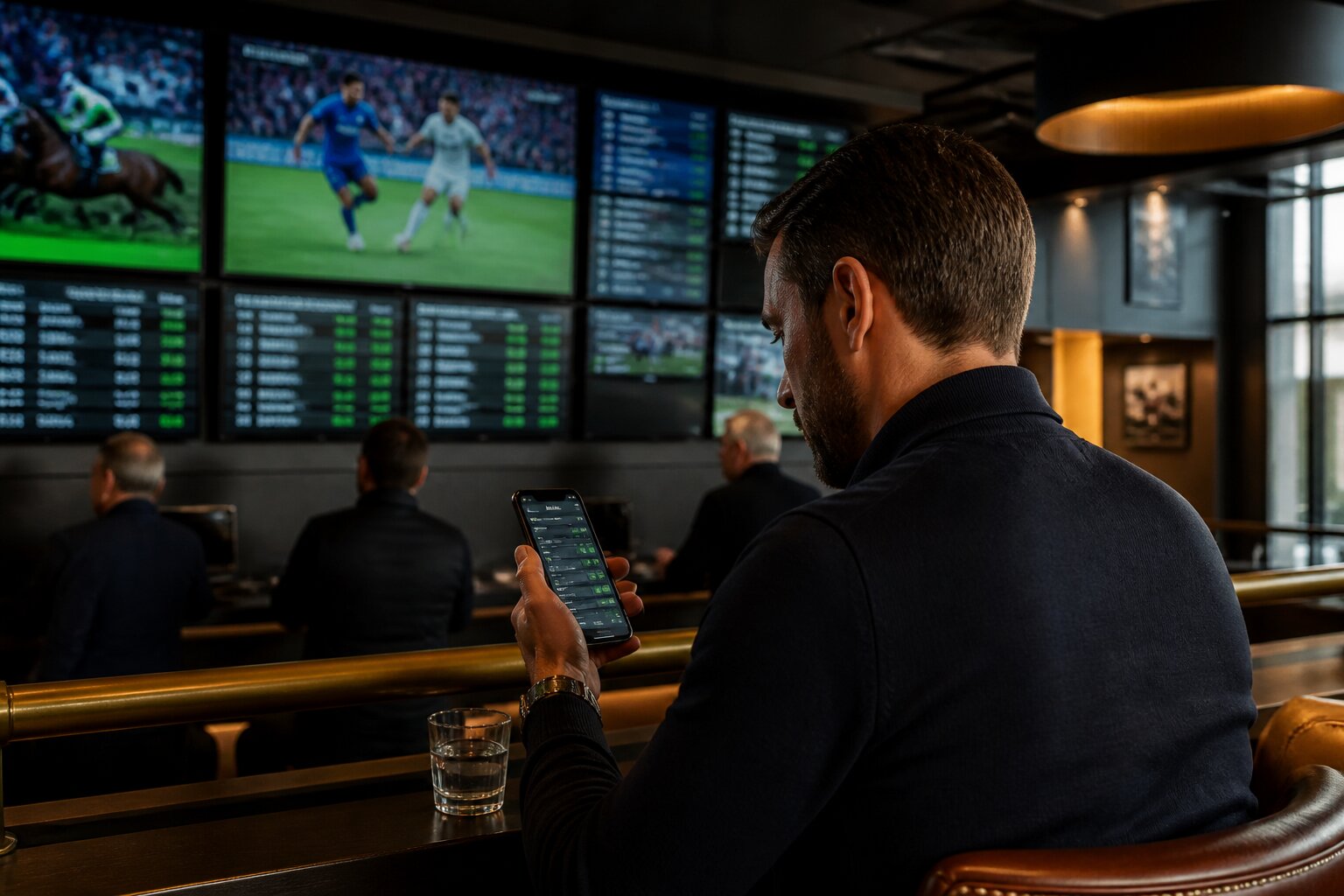
Ever wondered what sits behind the odds you see on a match or race? Understanding how sportsbooks operate gives you a clearer sense of why markets look the way they do and what to expect when you place a bet.
This article walks through the main mechanisms bookmakers use to stay profitable, explains common terms, and clears up a few myths so you can read markets with more confidence.
Ready to explore how the business works and what it means for your betting choices? Let’s begin.
What Is a Sportsbook and How Does It Work?
A sportsbook is a service that accepts bets on sporting events and settles those bets according to the outcome. As an operator, our role is to create and publish odds, accept stakes, and pay winners. Behind that simple description are a number of careful processes that keep the market functioning.
Setting odds involves estimating how likely each outcome is and then converting those probabilities into prices people can bet on. We combine statistical analysis, team and player form, historical data and market behaviour to arrive at those figures. Odds also reflect the need to balance the book so payouts don’t threaten the business.
Regulation is an important part of the model: licensed operators must verify age and identity, safeguard personal information and follow consumer-protection rules. These checks protect both customers and the integrity of the market, while ensuring funds are handled correctly.
You’ll see a wide range of markets, from straightforward win/lose bets to more detailed markets such as first goalscorer or correct score. Each market is priced to reflect probability and the operator’s margin.
Understanding the Betting Margin: The “Overround” Explained
Odds are not exact mirrors of true probability because bookmakers include a margin, commonly called the overround. This margin is built into every market so the total implied probability across all outcomes exceeds 100%.
Practically, that means the prices on each side of an event are slightly reduced compared with their “true” probabilities. For a two-way event where each outcome might be 50% in theory, the offered odds could imply totals above 100% once the margin is applied. That excess is what lets a sportsbook operate profitably over many events.
The overround covers operating costs and provides a predictable long-term edge. It’s applied transparently through the odds rather than as an extra visible fee, and its size varies by market — more competitive markets tend to have smaller margins.
How Do Odds Influence Casino Profits?
Odds are the primary tool for managing profitability and exposure. By adjusting prices, an operator can influence how much is staked on each outcome and limit the chance of a large, damaging liability.
When setting odds we weigh many factors: team and player statistics, injuries, head-to-head records and public betting patterns. If a large volume of bets comes in on one side, odds may shift to encourage more balanced staking and to reduce the potential payout if that side wins.
Over large volumes of bets, the margin embedded in odds produces steady returns for the sportsbook even though individual events can produce wins or losses. That aggregate effect is why odds management and market-making are central to the business model.
Where Do the House Edge and Vig Come From?
The house edge and the vig (short for vigorish) are two ways of describing the operator’s share of each market. Both arise from the same mechanism: odds that collectively contain an overround. The overround is the amount by which the sum of implied probabilities exceeds 100 percent, and it is built into prices to ensure the book favours the operator overall.
The vig is not an explicit charge shown as a separate line; it is the effective commission included in the odds. Bettors see slightly shorter prices than true, fair odds, and that difference is how the operator extracts margin from each market. The house edge describes the statistical advantage that margin gives the operator over time, so while individual outcomes can vary, the margin produces a predictable profit pattern across many bets.
Operators set margins differently by market and by event depending on competition, liquidity and risk management. They also balance books by adjusting prices to attract or discourage bets on particular outcomes, which helps limit exposure while maintaining overall profitability.
Together these elements make it viable for sportsbooks to:
- pay winners
- cover operating costs such as staff and compliance
- invest in technology and security
- meet regulatory requirements
- keep the business sustainable over the long term
Understanding the overround and how it translates into vig and house edge helps bettors recognise why prices differ between operators and why consistently beating the margin is challenging.
Most Common Ways Sportsbooks Balance Risk
Bookmakers use a variety of techniques to manage exposure and keep liabilities under control. These are practical measures that help markets remain orderly and allow the operator to offer many events simultaneously.
Before the list below, note that these measures are applied selectively depending on the event and the betting patterns observed.
- Limiting stakes: Maximum bet limits are sometimes imposed on large or lopsided markets to prevent a single punter from creating excessive liability.
- Adjusting odds: Prices move to reflect new information or to counter heavy betting on one side, encouraging money to spread across outcomes.
- Layoff or hedging: Operators may place opposing wagers with other books or on exchanges to offset concentrated risk.
- Market suspension or closure: If information arrives that could materially affect an event, markets may be suspended until there is clarity to avoid unfair pricing.
These tools work together to reduce the chance of outsized losses and keep markets functioning for all users.
What Is Line Shading and Why Do Bookmakers Use It?
Line shading refers to small, deliberate adjustments in the odds that shift value slightly toward one side. It’s often a response to heavy public betting or to information that suggests a particular outcome is being overvalued by the market.
Shading helps to modify expected liability rather than alter an event’s outcome. In practice it nudges some bettors away from one selection and makes the alternative more attractive, helping the operator keep the book balanced.
Popular Myths About Sportsbook Profits
There are a few persistent misconceptions about how bookmakers make money, and clearing them up helps make sense of market behaviour.
One myth is that operators manipulate results or use deceptive techniques to make punters lose. In regulated markets, strict rules and audits prevent such practices; adjustments like line shading are risk-management tools rather than attempts to influence outcomes.
Another mistaken idea is that markets are always weighted against bettors to a degree that makes fair returns impossible. While operators do hold a margin, many markets are competitive and offer value to knowledgeable punters who understand pricing and variance.
Understanding these realities makes it easier to approach betting with realistic expectations about risk and reward.
How Do Casinos Use Customer Behaviour to Their Advantage?
Operators analyse aggregate customer behaviour to improve markets and services, not to disadvantage individual players. By looking at broad trends rather than singling out people, firms can identify what works and what does not, and adapt accordingly.
Patterns such as:
- favourite markets,
- typical stake sizes,
- time-of-day activity
help shape product offerings and promotional decisions. This information is used to design clearer experiences, tailor communication to customer needs and manage capacity on popular events.
That same data supports protective measures:
- detecting unusual activity,
- spotting potential fraud,
- identifying signs that a customer may need help.
These safeguards are part of responsible operations and are intended to reduce harm while protecting the integrity of the platform.
Decisions to limit or review accounts are governed by regulatory standards and internal policies designed to protect customers and the wider market. Such actions are based on documented criteria, proportionality and are subject to oversight and appeal processes where applicable.
Transparency around data use and compliance with privacy rules are fundamental. Customer information is treated securely, access is restricted to authorised personnel and data handling follows legal and regulatory requirements. Interventions follow established procedures and customers are offered support and clear information about any decisions affecting their account.
Key Differences Between Online and In-Person Sportsbooks
Online and retail sportsbooks handle many of the same functions but do so in different ways. Technology gives online operators more granular insight into customer behaviour and faster means to adjust prices. It also enables prompt application of player protection tools and automated checks at scale.
Typical online player protection tools include:
- deposit limits and spend controls;
- activity alerts and session timers;
- identity and affordability checks performed in real time.
In-person venues rely more on trained staff to observe behaviour and manage transactions face to face. Staff can spot visible signs of distress or problem gambling and intervene directly, and they are able to manage cash transactions and loyalty interactions in a more personal way.
Both channels must meet the same regulatory and financial standards, including requirements around anti-money laundering and safer gambling. However, the practical tools available for monitoring and intervention differ between online and retail settings.
These differences affect how quickly odds move, how personalised communications can be, and which safeguards are most practical in each environment. For example, online prices can change instantly across a market, while in-person betting may see slower price adjustments. Personalised communications online can be highly targeted, whereas retail communication tends to be broader and staff-led. The choice of channel therefore influences user experience, risk management and the most effective ways to protect customers.
What Happens to Losing and Winning Bets?
Bets are processed and held until the outcome of the event is confirmed. Once an outcome is verified, settlements follow the published market rules and the operator’s terms and conditions.
-
Winning bets: winning stakes and any applicable payouts are credited to the customer’s account in line with the market rules and the operator’s stated procedures. Credit may take effect immediately online or be paid out at the point of sale in a physical location.
-
Losing bets: losing stakes are retained by the operator and recorded on the customer’s account statement so there is a clear audit trail of the transaction.
Online settlements are generally rapid. Balances update promptly after verification, and withdrawals become available subject to identity checks, anti-fraud and anti-money laundering procedures, and any other verification measures required by the operator and regulators.
In retail venues, payouts are handled at the point of sale and customers should retain receipts as proof of settlement. Customers may contact customer services if they believe a settlement is incorrect; the operator will investigate and provide information on how disputes are resolved.
All transactions are recorded to meet regulatory reporting requirements and to ensure funds are protected and traceable. Records are retained in accordance with regulatory and internal data-retention policies to support audits, compliance checks and any necessary investigations.
Are Sports Betting Profits Regulated in the UK?
Yes. The regulatory framework requires operators to maintain clear records, prevent financial crime and protect consumers. Regular audits, reporting obligations and compliance checks ensure that sportsbooks operate within prescribed standards.
Regulation covers how profits are managed, how customer funds are held, and how promotions are presented. It also requires operators to have measures in place for customer safety and to act on suspicious activity.
If you choose to bet with a licensed operator, you are using a service that is subject to oversight designed to protect customers and maintain market integrity.
**The information provided in this blog is intended for educational purposes and should not be construed as betting advice or a guarantee of success. Always gamble responsibly.