
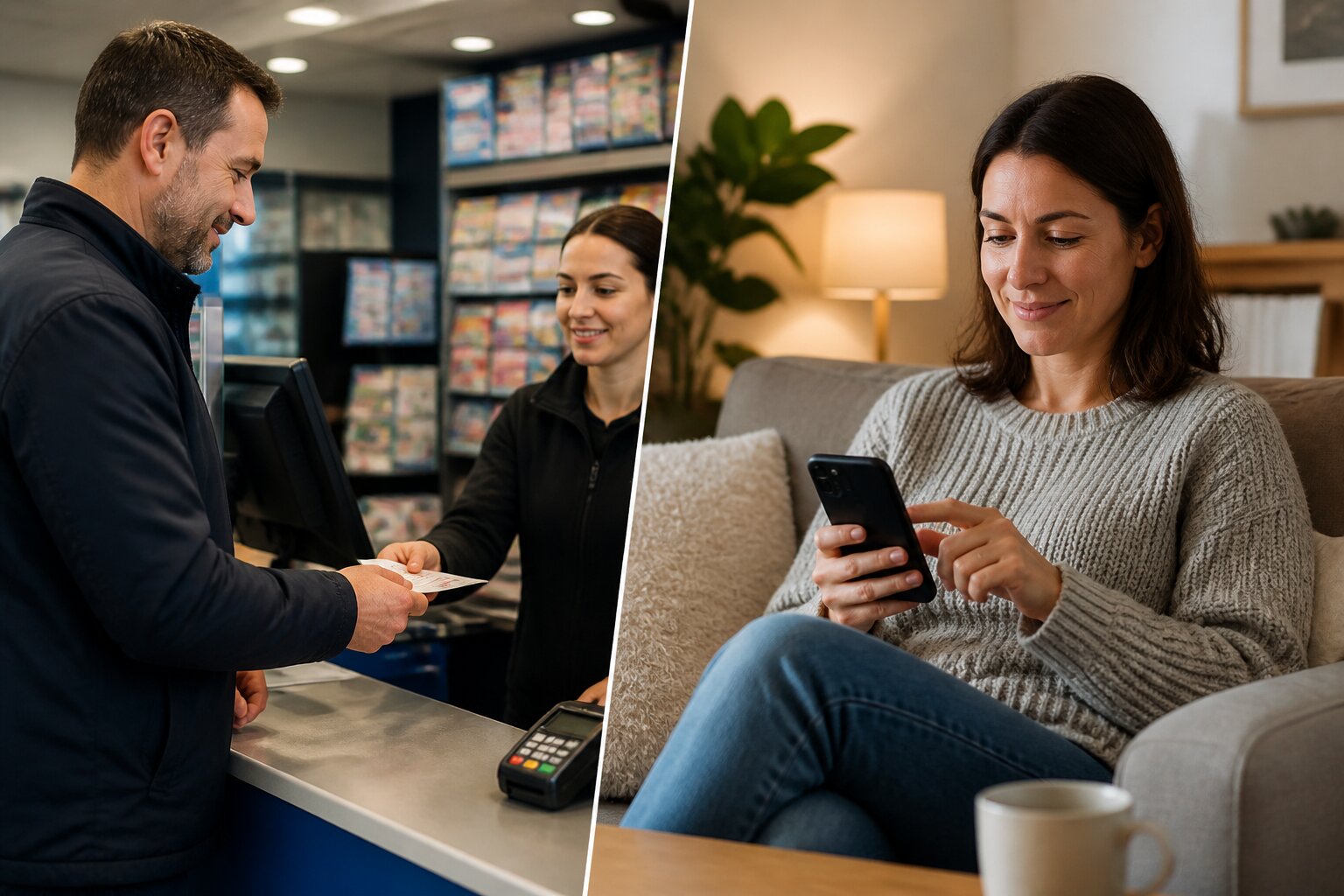
Thinking about whether you should buy your next lottery ticket online or pop down to the shop? With both options now widely available, it’s easy to wonder which one suits you best.
Online tickets put the purchase process on your phone or computer, while in-store purchases keep a long-standing routine and tangible ticket in your hand. Each route has practical differences in safety, payment and claiming prizes.
Below you’ll find a clear comparison, direct answers to common questions, and the key facts to help you decide how you prefer to play.
The Main Differences Between Online and In-Store Lottery Tickets
The buying process is the most obvious difference. Online, you create an account with an authorised operator, verify your details, add funds and select numbers or a one-click option. In-store, you fill a play slip or request a quick pick, pay at the counter and receive a printed ticket that you keep.
Security works differently too. Online tickets are linked to your account so they cannot be lost, while physical tickets are your responsibility and must be stored safely. Operators and retailers follow regulatory rules to protect players, but the protections take different forms: digital verification and encryption for online accounts versus ID checks and printed receipts in shops.
Accessibility and the user experience vary as well. Buying online is available at any hour and removes the need to remember or store a paper ticket. Visiting a shop can be part of a weekly routine and offers an immediate, social interaction. Which difference matters most depends on how you like to manage purchases, and next we’ll consider which method is more convenient day to day.
Which is More Convenient: Buying Online or In-Store?
Convenience often decides where people buy tickets. Online services are designed for quick purchases and ongoing management, while shops are simple and familiar for those who prefer in-person transactions. The choice commonly comes down to personal habits, local availability and how comfortable someone is with digital payments and account management.
Steps to Buy Lottery Tickets Online
Account creation is the starting point online, where verification confirms age and identity before purchases are allowed. This process usually takes only a few minutes, but additional checks may be required for larger transactions or to comply with regulatory requirements. Once set up, funding happens by secure electronic payments and tickets appear in your account after each draw.
Online systems include tools to monitor activity and set spending controls, which can help people manage how much they spend and track their play history. Notifications let you know if you have a winning ticket so you do not need to check results manually, and some services offer automated prompts about unclaimed prizes. These features are intended to make management simpler while helping players stay aware of their account activity.
Steps to Buy Lottery Tickets at a Shop
In a shop, you choose your game, complete a paper play slip or ask for a quick pick and pay at the till. The interaction is straightforward and can feel more tangible because you receive a printed ticket at the point of sale. Retail staff perform age checks when necessary, which may involve asking for proof of identity.
The printed ticket is handed to you and becomes your proof of entry; it is important to sign it and keep it safe until after the draw. If you win, you will need to follow the operator's guidance for claiming prizes, which may include returning to the retailer for smaller wins or contacting the lottery for larger amounts. Keeping receipts and records can simplify any later queries about claims.
Accessibility and Opening Hours
Online access means buying tickets from any connected device at nearly any time, with only brief maintenance windows affecting availability. This 24 hour access can be particularly useful for people who work non-standard hours or who live far from retail outlets. Shops operate during opening hours and may be fewer in rural areas, which can make online play the more accessible option for some.
Both methods must meet regulatory standards, including secure payment handling and age verification, but the round-the-clock nature of online platforms gives them a clear edge for convenience. That said, some people prefer the social element or immediate confirmation of a shop purchase, so real-world availability and personal preference still play a significant role.
These practical differences lead naturally into the question of security, which is important whether you play online or in person. Operators are required to follow rules that protect players and their funds, and knowing how each channel handles verification, storage and notification can help people make an informed choice.
Are Online Lottery Tickets Safer Than In-Store Purchases?
Security measures are robust for both channels, though they focus on different risks. Online operators use encryption, secure payment gateways and account controls to protect data and transactions. Age and identity checks are completed at registration to prevent ineligible play, and account settings often include spending limits and activity summaries.
In retail settings, staff training, receipt records and mandatory ID checks guard against underage sales and fraud. A printed ticket must be presented to claim a prize, so owners are encouraged to sign tickets and keep them in a secure place. Both routes are subject to audits and oversight to ensure integrity.
With security covered, the next practical consideration is how payments work for each option.
Payment Options: What Are the Choices for Each Method?
Online platforms typically accept debit cards and a range of digital payment methods. Credit cards are not permitted for gambling deposits in the UK, and operators will enforce that restriction. Transactions are encrypted and processed through recognised providers to protect financial data. Some payment services may charge their own fees, so it is worth checking with your provider if you have concerns.
In shops, cash and debit card are commonly accepted, though card acceptance depends on the retailer’s terminal. Retailers cannot add surcharges to the official ticket price. Whether online or in-person, the aim is to make payments straightforward while adhering to regulatory safeguards.
Understanding payments helps when you need to know how winnings are claimed, which is addressed next.
Prize Claims: Online vs In-Store Winnings
Claim procedures differ by where the ticket was bought and by the prize amount. Operators follow clear processes to verify winners and pay out funds securely. These processes are designed to protect both the player and the operator, ensuring claims are handled fairly and in line with regulatory requirements.
Small Prizes
Small amounts won on online purchases are often credited automatically to your account, enabling prompt withdrawal once any verification checks are complete. Where accounts are already verified, this can happen very quickly, though operators may still apply routine security checks to confirm the win and the account holder.
For physical tickets, small prizes can usually be collected at participating retailers by presenting the winning ticket. Retail staff may request ID for amounts near the in-store payout limit to prevent fraud and confirm the rightful claimant. If a prize exceeds a retailer’s payout limit, further steps will be explained and you will be directed to the appropriate claims process.
Large Jackpots
Large online wins involve direct contact from the operator and detailed verification before payment. This contact will typically be by secure message or phone and will outline the documentation required, expected timescales, and the steps the operator will take to transfer funds.
For major shop wins, you must follow the official claim process, which includes presenting the winning ticket and providing proof of identity. In many cases you will also be asked to sign confirmation documents and may be invited to visit a claims centre. In all cases, information is handled securely and claims take place in a controlled way to protect everyone involved and to meet anti-money laundering and responsible gambling obligations.
Prize Payment Timeframes
Smaller payouts tend to be quicker, while larger awards require additional checks and therefore take longer to complete. Operators aim to process claims efficiently while fulfilling their legal responsibilities to verify identity and ownership. Timescales can vary depending on the size of the prize and the complexity of the verification required, and operators will normally keep you informed throughout the process.
Next, consider whether there are any hidden costs when buying a ticket.
Fees and Costs: Are There Any Extra Charges?
Ticket prices for official draws are fixed and should be the same whether you buy online or in a shop. Licensed operators and retailers cannot add undisclosed charges to the official price. Online payments may attract fees from payment providers outside the control of lottery operators, so checking with your bank or payment service is sensible if you expect charges.
Shops present the total price at the till and cannot legally apply extra processing fees. Transparency around cost is part of regulatory oversight, so any difference in what you pay will usually come from third-party payment services rather than the lottery itself.
Having covered cost and payment, the next legal point to be clear on is who is allowed to buy tickets.
What Are the Legal Requirements and Age Restrictions?
Legal rules restrict participation to those aged 18 or over. For online play, these checks take place during account registration and must be satisfied before you can buy a ticket. Operators use identity verification processes to confirm age, which may include checks against official databases and third party verification services. These measures are designed to prevent underage gambling and to keep the activity within legal limits.
Retail staff will request proof of age in person when there is doubt about a customer’s eligibility. Acceptable forms of identification typically include passports, driving licences and other government issued ID that clearly shows date of birth, though specific acceptable documents may vary between operators. Staff are trained to make these checks politely and professionally to protect both the business and the customer.
Only residents eligible under the operator’s rules may take part in official draws through licensed channels. This means you must meet residency and any other local criteria set by the operator to be eligible to participate and to claim prizes. Operators must comply with licensing conditions and will refuse play or payments where eligibility cannot be confirmed.
These controls are in place to protect players and ensure responsible conduct across the sector. They also form part of broader safeguards, such as self exclusion schemes and limits on account activity, which operators are required to offer and promote. These measures help to reduce harm and maintain public confidence in licensed services.
Questions about anonymity and privacy often come up next, which is covered in the following section.
Can You Stay Anonymous When Winning Online or In-Store?
Winners can usually choose to remain anonymous for public purposes, whatever the purchase method, but identity checks are always completed before paying large prizes. Operators will collect the necessary details to verify claims and to meet regulatory obligations, and they will not disclose personal information publicly without the winner’s consent.
Smaller prizes are typically paid with fewer formalities and often remain private, with limited or no publicity unless the winner agrees. For significant winnings, operators must carry out more thorough checks to confirm identity and source of funds, and to comply with anti-money laundering and other legal requirements.
Operators must handle personal data securely and in line with privacy laws, so winners retain as much control as possible over whether their identity becomes public. That said, where disclosure is required by law or requested by relevant authorities, operators may have to share information even without the winner’s consent.
Winners should read the operator’s terms and publicity policy and make their preferences known early in the claims process, so expectations about anonymity and publicity are clear from the start.
FAQs About Buying Lottery Tickets Online and In-Store
Understanding the practicalities makes it easier to decide how to play. Below are concise answers to commonly asked questions.
Can I Buy Tickets Online for All UK Lotteries?
Most major draws are available online through official channels and authorised apps. Some smaller society or charity lotteries require direct entry, so availability varies. Checking the organiser’s official site will confirm whether a particular lottery can be played online.
When buying online you must be the legal age to play, usually 18 or over, and many sites will require identity verification before accepting tickets or paying prizes. Always check the terms and conditions so you are clear on payment methods, fees, and how prizes are paid.
What If I Lose My Paper Lottery Ticket?
A lost paper ticket is typically not replaceable and cannot be used to claim a prize. It is advisable to sign the ticket and store it safely until the draw. Keep purchase receipts or any confirmation slips as extra proof of purchase where possible.
If a ticket is damaged, contact the operator promptly to determine whether it can still be validated. Operators will tell you the steps to follow and any deadlines for making a claim, so act quickly if you suspect a problem.
Is It Safe to Use Third-Party Lottery Apps?
Only use services authorised and regulated by the relevant authorities. Licensed providers offer secure payments and recognised complaint and claims procedures. Check that an app or website is listed on the Gambling Commission register and look for clear contact details and terms before you play.
Unauthorised apps may not provide these protections and could prevent you from claiming winnings. Always look for secure payment logos, read user reviews and be cautious about apps that ask for unusual permissions or upfront transfers.
Can I Set Limits on How Much I Spend?
Online accounts normally include options to set deposit and spending limits and to view activity history. These tools support sensible play and are recommended to help manage participation. Many providers also offer cooling-off periods, self-exclusion and links to support services for those who need them.
Retail shops cannot apply personal limits to your account but staff may refuse a sale if they have concerns about a customer’s behaviour. If you want to restrict your play across multiple sites, consider services such as GAMSTOP which provide an industry-wide self-exclusion option.
Final Thoughts: Which Option Is Best for You?
Choosing online or in-store comes down to how you prefer to manage purchases and what matters most to you. Online play offers convenience, account-based safekeeping of tickets and tools to monitor activity. Shopping in person delivers a straightforward, familiar purchase and a physical ticket to keep.
Whichever route you choose, follow the legal age rules, keep your personal details secure and make use of the management tools available to maintain control over how you play. With those safeguards in place, both methods provide a regulated and reliable way to participate in official lottery draws.
**The information provided in this blog is intended for educational purposes and should not be construed as betting advice or a guarantee of success. Always gamble responsibly.